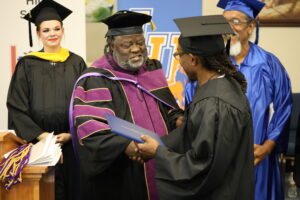
Prentice Ponds II fought back tears as he shook hands with Dr. Alonzo Peterson.
An inmate at Dick Conner Correctional Center (DCCC) in Hominy, Oklahoma, Ponds never thought he would have the opportunity to attend college. It was one of the many doors he assumed had been closed to him for good when he received a life sentence for a robbery conviction in 2017. But thanks to Langston University’s Second Chance Pell Program, Ponds graduated with his Bachelor of Business Administration degree on Aug. 14.
“It was just an experience that I thought I would never have,” Ponds said. “And I had the opportunity and a chance to take it. So I did, and I love it. You know, and I advocate for (this program) all the time.”
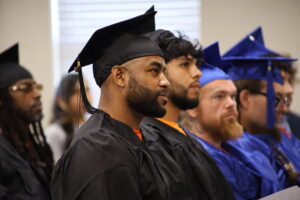
Ponds was one of nine inmates who graduated from Langston University and participated in a small graduation ceremony at the medium security chapel at the DCCC. Many of the inmates had friends and family who attended, along with several LU faculty and staff.
Nine inmates at Dick Conner Correctional Center graduated from Langston University in a small ceremony on Aug. 14, 2026.
The celebration included remarks from Dr. Ruben Herron, a professor in LU’s Department of Rehabilitation and Disability Studies, as the guest speaker; an honors student recognition for those on the Dean’s and President’s Honor Rolls; induction into the Delta Mu Delta Honor Society for qualifying students; and the formal conferral of degrees. The ceremony also included a recognition and diploma conferral for inmates who graduated from the Oklahoma Department of Corrections’ Lakeside High School.
Seven men graduated with their Bachelor of Business Administration, and two men graduated with their Bachelor of Science in Rehabilitation Services.
“It was truly a special day,” said Dr. Peterson, LU’s Vice President for Academic Affairs. “You could see what the moment meant not only to the graduates, but also to their families and loved ones, as well as our faculty and staff who have worked with these students along the way.”
The Second Chance Pell Program operates under LU’s Tulsa Campus. It was established in 2017 under the U.S. Department of Education’s Second Chance Pell Initiative, which restored Pell Grant eligibility for incarcerated individuals in 2015. Beginning with the 2026-27 school year, the Second Chance Pell Program will transition to a Prison Education Program.
Students in the program are able to choose between degrees in Business Administration or Rehabilitation Services. These degree programs were chosen because they are best suited to serve the graduates when they complete their sentences and re-enter the workforce.
Sylvester Stanley, a Rehabilitation Services graduate, said he loved the program because it helped him learn more about himself and has motivated him to keep pursuing education.
Sylvester Stanley earned his Bachelor of Science in Rehabilitation Studies. He wants to use his degree to help at risk youth in Tulsa when he is released.
“It helped me to kind of grow and change in here to where I know I’m locked up, but I’m not locked up,” Stanley said. “Because it’s a mindset thing. So, I take my mind and use it as a tool to help me better myself and the people around me. I’ve got this support system in the world, and I want to let them know that I’m not allowing prison to be the deciding factor of how I act or dictate my mood or my feelings.”
To qualify for graduation, the inmates must meet all the same degree requirements as regular LU students. For many, this takes longer than the standard four years because they may have to take a semester off to work or see to responsibilities within the court system. Ponds and Stanley remained dedicated to their studies, and they both earned honors for their work. Ponds was even able to graduate with a perfect 4.0 GPA.
Stanley said it was important to him to devote his time to his studies because he has goals for his life after DCCC. When he’s released, he wants to work with at risk youth in Tulsa to help prevent them from making the same mistakes he did. He hopes to have an opportunity to begin working on his master’s while still in jail so that he will be one step closer to becoming a licensed professional counselor when he leaves.
For Dr. Peterson, this is the true goal of the program. He doesn’t see it as simply a way for the inmates to earn degrees; it’s a way for them to take control of their futures.
“I am proud that Langston University is able to provide this opportunity,” Dr. Peterson said. “These men made a decision to use education to change the direction of their lives, and they worked hard to earn their degrees. When they return to their communities, they will do so as college graduates with an education they can use to create new opportunities for themselves and their families. And just as importantly, they are now proud alumni of Langston University.
“For me, this is what our work is really about: changing lives, creating opportunities and giving people hope for what comes next.”
The Langston University Rehabilitation Counseling Program has been named one of the Top 10 rehabilitation counseling graduate programs and the Top HBCU program in the nation by U.S. News and World Report.
Langston University rose 8 points in the rankings from 2025 to be named the tenth best program in the United States. Previously tied with Winston-Salem University, LU now sits as the highest ranked Historically Black College or University (HBCU) on the list.
“We are incredibly proud to see our Rehabilitation Counseling program break into the Top 10 nationally,” said Dr. Corey Moore, the founding director of the program. “While the ranking is a high honor, the true reward is watching our graduates enter the workforce fully equipped to lead, and seeing our research translate into better outcomes for the communities we serve.”
Langston University was ranked above programs from the Illinois Institute of Technology, Northern Illinois University, University at Buffalo-SUNY and others.
This accomplishment comes as the program celebrates its 25th anniversary, and LU President Ruth Ray Jackson recently honored Dr. Moore with a Distinguished Service Award for his leadership as the founding chair of the Department of Rehabilitation and Disability Services.
Langston University’s rehabilitation counseling master’s program is available in Oklahoma City and Tulsa. Students benefit from small class settings that allow for more one-on-one interaction with the program’s distinguished faculty, and they have opportunities to participate in ground-breaking research at the department’s two federally funded Rehabilitation Research and Training Centers. Many of the students receive scholarships funded by the Office of Special Education and Rehabilitation Services/U.S. Department of Education, and all students participate in hands-on internships.
“We will use this momentum to further enhance the academic preparation of the next generation of rehabilitation and mental health professionals and to continue translating our high-impact solutions-oriented research initiatives funded by the National Institute on Disability, Independent Living, and Rehabilitation Research/Administration for Community Living,” Dr. Moore said.
For more information about the Rehabilitation Counseling Program, please visit langston.edu/rehab.
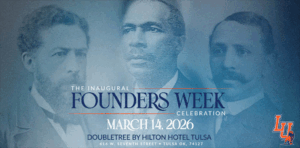
Langston University is set to celebrate 129 years since its founding with a week of ceremonies and celebrations in Langston and Tulsa. The events will include musical performances, the annual Founders Day Program and an Inaugural Founders Week Celebration Gala.
The Langston University Department of Music will present The Chamber Collective musical performance on Tuesday, March 10. This collection of small ensembles will feature both choral and instrumental performances. The event will be held in the I.W. Young Auditorium on the Langston Campus at 6:30 p.m.
The annual Founders Day Program will be held at the I.W. Young Auditorium on the Langston Campus at 11 a.m. on Thursday, March 12. The theme for this year’s program is “Honoring Our Past, Empowering Our Promise,” and the featured speaker will be Dr. Tiffany Crutcher, Founder and Executive Director of the Terence Crutcher Foundation.
Dr. Cruther is an alumna of Langston University, and she is a nationally recognized justice advocate, community leader and social impact advisor. As Founder and Executive Director of the Terence Crutcher Foundation, she leads transformative initiatives focused on public safety, criminal justice reform, economic mobility and community healing. She also serves as a Founding Board Member of Justice for Greenwood, Senior Advisor to Black Tech Street and Advisor to Roc Nation’s United Justice Coalition.
Langston University will end the week with the Inaugural Founders Week Celebration Gala in Tulsa on Saturday, March 14.
The Founders Week Celebration Gala, a black-tie optional event, will include a formal dinner, awards presentation and live music. There will also be a special presentation to commemorate the 25th anniversary of the Master’s in Rehabilitation Counseling program, which has since spurred the creation of a bachelor’s program, the formation of the Department of Rehabilitation and Disability Studies, the establishment of two federally funded Rehabilitation Research Training Centers, and the creation of a post-doctoral research program.
The Chamber Collective and annual Founders Day Program are free and open to the public. The Founders Week Celebration Gala is a ticketed event. Tickets can be purchased online at langston.edu/founders-week through Friday, March 6.
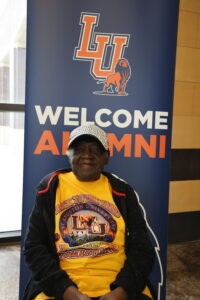
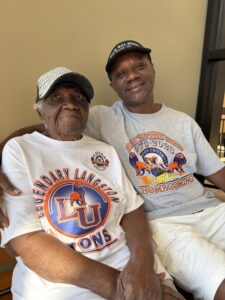
Music, laughter and conversation filled Langston University-Tulsa’s front lobby on the Tuesday of Homecoming Week as students, faculty, staff, alumni, community members and their families flocked to the campus for its annual Homecoming Block Party on Oct. 7. Sitting at a table in the middle of the lobby, happily chatting with anyone who wanted to stop by, sat 98-year-old Ozetta Parker (née Walker).
As Parker looked around at all the activity, it amazed her how much things had changed at Langston University since she was a student in 1946.
Parker grew up on a farm near Tulsa in the 1930s as one of nine kids. She enjoyed farm life, especially the big homemade meals her mother would prepare, but education was always a major focus in her community. So when her older sister Pauline moved to the city, Parker began staying with her during the school year so she could attend Booker T. Washington High School.
Parker enrolled at Langston University in 1946 with a major in home economics.
In the city, Parker and her siblings walked everywhere they needed to go, and they didn’t go out at night. They lived in a tight-knit community where everyone looked out for one another. Her teachers were strict, but Parker could tell they cared. When Parker graduated from high school in 1946, Pauline encouraged her to attend college and study home economics.
“She liked my cooking,” Parker laughed.
Langston University didn’t have a campus in Tulsa back then, so Parker made her way out to Logan County. She lived in Sanford Hall–which was a women’s dorm at the time–and studied home economics.
Life at LU was different than what Parker was used to. The rural campus felt almost isolated from normal society, and Parker thought her dorm room didn’t have much space. She especially missed her mother’s cooking. But there was a lot about life at Dear Langston that she loved, too.
The university offered plenty to do as far as providing students with social activities. Students went to sporting events and church regularly, and when there were dances, they were well attended. Parker met a lot of people and made a lot of friends.
“They had entertainment for us,” Parker said. “They had a little place where you could go dance. I don’t know what they called it … but you go there and socialize when you had the time.”
Although Parker spent a lot of time studying in her room or in the library, she said she enjoyed her classes. Her home economics courses taught her about a variety of things, including cooking, proper housekeeping and sewing. She learned she really enjoyed sewing. She loved drawing her own designs and then using them to create items like aprons and dresses.
Parker passed her love for Dear Langston down to her children, and she brought them to Homecoming every year.
Parker loved her time at LU, but she had to leave after two years. She moved to Oklahoma City, found work, got married, started a family and moved back to Tulsa, but she never forgot about her time at Dear Langston.
For years, Parker would return to LU with her family for every Homecoming. She loved connecting with old friends and seeing how much the campus and university continued to grow. But as she got older, the trip out to Langston became harder to make, and she stopped going.
This year, her son saw an advertisement for the Homecoming Block Party at LU-Tulsa, and they were both excited to attend their first Langston University Homecoming celebration in several years.
This provided her the opportunity to remember not just what Langston University meant to her, but what it can mean to everyone.
“Education is what’s going to help us make this world a better place,” Parker said. “(Langston University) is a good place to go to learn and socialize and entertain and leave a legacy for the children behind us to go as high as they can.
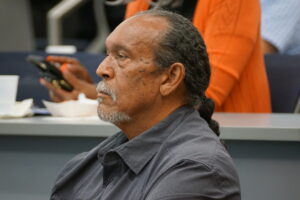
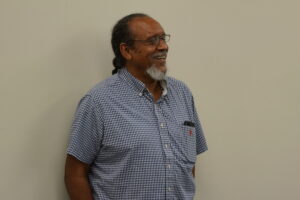
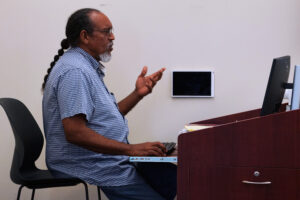
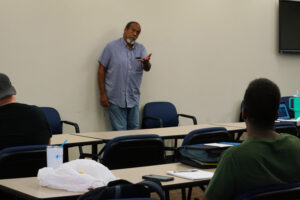
Standing at the front of the classroom on a Wednesday evening, Dr. Ruben Herron knows he’s exactly where he’s supposed to be.
As he leads the room of graduate students in an energetic discussion about client-provider dynamics in rehabilitation counseling, it’s hard to imagine there was a time when he felt like he didn’t have a calling. But for most of his early adulthood, Dr. Herron struggled to find his place in the world.
Throughout his 20s and 30s, Dr. Herron tried his hand at several careers, but he could never find a job where he felt truly fulfilled. Years of trial and error in various fields eventually brought him to Langston University to study rehabilitation counseling, and a chance opportunity years later brought him back to LU to teach. Now, he knows there was always a perfect career out there for him.
He just had to find it.
A Rough Beginning
Ruben Herron moved around a lot when he was a kid.
His family was from El Paso, Texas, but his dad was in the Army. As they accompanied him to each new duty station, the Herrons lived in places like Germany and England before eventually making their way to Wichita Falls, Texas.
Herron moved back to Wichita Falls after his time in the Marine Corps, but he had a hard time finding a job. Photo Credit: Craig Taylor Photo/AdobeStock
When Herron graduated high school, his father offered to pay for him to attend the local community college, but Herron didn’t want to go to school. He decided to enlist in the Marine Corps instead, and he spent a year in California at Camp Pendleton before he got out and moved back to Wichita Falls.
He returned to Texas during the 1980s “oil glut,” and work was hard to find. He took his dad up on his offer to pay for school, but Herron wasn’t a good student and soon dropped out. He got a job doing manual labor at a pipe yard until one Monday, he came to work to find out he’d been laid off.
“Suddenly, we all got pink slips,” Herron said. “And then there were no jobs in Wichita Falls because the big factory shut down. I mean, everybody was getting laid off.”
Herron and his wife decided it was time to leave Texas, so they moved to Tulsa, where his wife’s aunt lived. They arrived in two cars with three kids and a dog, and they were disappointed to find the job market wasn’t much better than it had been in Wichita Falls. Regardless, Herron was determined to provide for his family, and he finally found a part-time job as a sanitation worker.
It was hard, dirty and exhausting work, but Herron persevered. Eventually, he left the trash company for a job at Climate Control. He did his best to provide for his wife and kids, and he was grateful to receive government assistance during those days.
In the late ‘80s, Herron finally felt like he had a breakthrough. He found a new job as a maintenance man for an apartment complex, and he and his family moved out of government housing. For the first time in a while, they even had some money left over after their bills.
Herron and his wife began taking classes at TCC whenever they could afford it.
“They paid part of our rent at the apartment complex we was working at, and I was able to pick up a lot of overtime,” Herron said. “And so, we started to move up the ladder a little bit.”
During this time, Herron felt like he was starting to understand the importance of school. A better education could lead to a better job, and Herron wanted a better job. He and his wife decided to start taking classes at Tulsa Community College (TCC) together in bits and pieces as they could afford it.
Despite their improved circumstances, Herron’s success was short lived.
He felt dissatisfied with his life, and he began facing mental health issues. He sought out unhealthy coping mechanisms, and he ended up getting fired from the apartment complex. His marriage suffered because of it, and his wife left him.
Herron fell into a depression. He felt angry, hurt and frustrated, and he didn’t know what to do. He found himself involved in illegal activities, which led him to spend two and a half years in a correctional facility.
“Because of my own stubbornness, my own ignorance, my own selfishness, I chose the path I chose,” Herron said regretfully.
He felt like he had hit rock bottom, and he still has a lot of emotions to process when he thinks about that time. But he soon discovered the only thing to do was keep moving forward.
Never Too Late
When he was released from the correctional facility, Herron was determined not to go back.
He began working at Bennett Steel Inc. as a sandblaster, a job he thoroughly enjoyed because of how peaceful and almost meditative it was. He earned good money, and he felt like he was starting to move up in the world again. Most importantly, Herron met a man who would help him change his life: the company’s owner, Dave Bennett.
Seeing a counselor changed Dr. Herron’s life for the better.
Bennett was a great boss. He cared about his employees’ wellbeing, and he became a mentor for Herron. It meant a lot to Herron to have someone looking out for him. But as time went on, he found himself becoming restless again.
He liked his job and his boss, but he was still dealing with mental health issues. He still felt dissatisfied with his life. He began acting out in small ways, and Bennett noticed immediately.
Bennett wasn’t about to let Herron slip into old habits, so he convinced Herron to see a counselor.
“Through Dave Bennett’s help, I went and started seeing a counselor, which was really, really, really transformative,” Herron said. “She made me go there with myself, but she sort of held my hand. Like, ‘You know this is what you want. You know you want to let it out. Let it out. Trust yourself.’ And that was the biggest process.”
Counseling changed Herron’s life, and he found a kinder, softer version of himself. He learned how to take care of his mental health and how to cope with negative thoughts. He became someone he liked to be.
He continued to see the counselor while he worked at Bennett Steel, but the feelings of restlessness and dissatisfaction never went away completely. Once, he was having a particularly bad day when Bennett walked in, and he realized what he needed to do.
“Dave Bennett walks in, and I said, ‘Dave, will you loan me $375 bucks so I can go back to TCC?’” Herron said. “And he reached in his pocket and said, ‘Yeah.’ So that’s how I started back at TCC.”
In 2001, Herron went back to school. It was hard to study while working full time, and he faced some unexpected challenges, such as rapidly changing technology, but he was determined to see it through.
In 2004, he left Bennett Steel for a job at 12&12 as part of their substance abuse group counseling team, and he finally felt like he had found a calling. This motivated him as he continued his classes at TCC, especially when he worked two jobs in 2006 to buy his first house. In 2009, Herron graduated from TCC.
“I earned my associates after 28 years,” Herron said. “I earned my associates, and I didn’t know what to do. Then, a classmate of mine suggested I come up here (to Langston University), and I met Dr. (John) Sassin, and within five minutes of walking through his door, I was enrolled in the bachelor’s program.”
After earning his associate’s degree at TCC, Dr. Herron enrolled at Langston University and earned his bachelor’s degree in Rehabilitation Services before going on to earn his master’s degree in Rehabilitation Counseling.
Keeping the Momentum
Herron had learned he could be a good student, and he wanted to keep his momentum going as he pursued a career in counseling. He enrolled at LU-Tulsa in the rehabilitation services bachelor’s degree program in 2009, and he had a better college experience than he could have imagined.
A generous scholarship relieved him of the financial burden of his degree, and he felt like the doors to an untold wealth of knowledge had been opened. His professors became cherished mentors, and he truly understood what it meant to be part of the LU family.
In 2011, Herron had the great honor to walk across the stage at Langston University’s graduation ceremony with his daughter. A couple of months later, he was back in the classroom again as a student in LU’s rehabilitation counseling master’s program.
He continued to work at 12&12, and he continued to enjoy school. One day, Dr. Mary Ramey, an adjunct professor in the rehabilitation counseling program, kicked her shoes off in the middle of class and sat on a table. That behavior baffled Herron, who had always thought of academics as more formal and aloof. But Dr. Ramey seemed normal.
“It just sounds so strange, but that’s what it was to me,” Herron said. “And she looked right at me on that table and said, ‘You could be (a doctor) if you want to.’ And that’s the night it started. She inspired me.”
After that class, Herron contemplated pursuing his doctorate for weeks until one night, he realized that if he wanted to do it, he couldn’t wait.
The day after making that decision, he told Dr. Sassin about his new goal. Having taught and advised Herron for almost four years, Dr. Sassin was supportive of his plan. He helped Herron connect with faculty at the University of Arkansas, and after graduating with his master’s from LU in 2013, Herron enrolled in the University of Arkansas’ doctoral program in counselor education and supervision.
Dr. Herron returned to Langston University as a professor in the very program he graduated from, and he loves teaching and providing mentorship to students.
Herron went to school part time, making the two-hour drive to Fayetteville twice a week. It was difficult, and he even ended up sleeping in his car some nights, but he persevered. In 2017, he officially earned his professional counseling license and began working on his dissertation with Dr. Ramey as his dissertation committee chair.
Everyone Has a Place
Unbeknownst to Herron, other LU faculty had been keeping track of his progress throughout his doctoral program, too. In 2017, a faculty position opened in the LU-Tulsa rehabilitation counseling program, and Dr. Phillip Lewis reached out to Herron to invite him to apply.
“He had already gained his CRC and his LPC, which he is a Certified Rehabilitation Counselor and a Licensed Professional Counselor,” said Dr. Lewis, the graduate coordinator for the rehabilitation counseling program at LU-Tulsa. “So, it was a perfect fit for me to bring Dr. Herron in to fulfill that role, because I didn’t lose anything. I just kind of transitioned, and I didn’t have to worry about a person not having the credentials.”
Dr. Herron had never imagined he would become a teacher, but the opportunity to come back to Dear Langston was too good to pass up. He has thrived in the role since then.
Dr. Herron’s teaching style draws a lot on his own life experiences. As someone who has received counseling, administered counseling and studied counseling extensively, he brings invaluable insights into the classroom. His classes are often filled with lively discussions, and students walk away feeling like they’ve learned.
As both a friend and supervisor, Dr. Lewis loves working with Dr. Herron. According to Dr. Lewis, Dr. Herron’s unwavering positive attitude often lifts the spirits of the whole office.
“He’s been an excellent colleague, and to be honest with you, I don’t think I could’ve found better,” Dr. Lewis said. “Him working here, he’s a product of this program. He’s homegrown, you know. And I think it’s a blessing to kind of work your way back home sometimes.”
After so many years of struggling with feelings of dissatisfaction in his life, Dr. Herron is proud to say he loves his job. He has found a balance between work and his family, and all eight of his dimensions of wellness are being fulfilled.
When he was a young man, he never could have guessed where he’d be today. He loves teaching because it allows him to pass down the mentorship that he, too, received at LU, and he feels like he’s giving back to his community. Now that he has found his place in the world, he has no plans to slow down any time soon.
“I would say to young people, old people, it’s never too late,” Dr. Herron said. “If you look at all the possible jobs out there, there is a job for you that you can be passionate about, that you can enjoy doing. So don’t give up. Stay encouraged. Have some faith and trust yourself.”
Dr. Herron loves his job, and he knows that he has finally found his place in the world.
OKLAHOMA CITY–Langston University’s Department of Rehabilitation and Disability Studies earned $3.125 million in grants from the U.S. Department of Education to support the university’s rehabilitation programs, including funding 96 full-tuition scholarships over the next five years.
The department has been awarded three grants; one is from the Office of Special Education and Rehabilitation Services (OSERS), and two are from the Rehabilitation Services Administration (RSA).
The first grant, funded through the RSA and totaling $1 million over five years, will establish a specialized Pre-Employment Transition Services to Youth with Mental Disabilities track within the department’s master’s program for Rehabilitation Counseling. This will include funding the tuition, fees and a living stipend for 30 graduate students over five years.
The second grant, worth $1.25 million and funded by OSERS, will establish a new track within the undergraduate Rehabilitation Services bachelor’s degree program. The new track will be School-to-Work: Preparing Personnel to Serve School-Age Children with Intellectual and Developmental Disabilities, and the grant will fund the tuition, fees and a living stipend for 36 undergraduate students over the next five years.
The last grant is from the RSA and will pay out $875,000 over five years. This grant will establish another new track within the Rehabilitation Services program: Pre-Employment Transition Services to Youth with Intellectual and Developmental Disabilities (including Autism). It will fund 30 undergraduate scholarships over the next five years, which will include tuition, fees and a living stipend.
“Langston University is honored to receive this transformative investment from the U.S. Department of Education,” said President Ruth Ray Jackson. “These three grants reflect our unwavering commitment to preparing highly qualified professionals who will serve youth with mental, intellectual, and developmental disabilities.
“I commend Dr. Corey Moore and the Department of Rehabilitation and Disability Studies for their leadership in advancing inclusive education and workforce development. This funding strengthens our mission as a land-grant institution and expands access to high-impact academic programs that meet urgent national needs.”
Dr. Corey Moore is the Founding Chair of the Department of Rehabilitation and Disability Studies.
Undergraduate students interested in the Rehabilitation Services program who wish to apply for the scholarships within either track must have completed at least 41 hours of general education courses prior to applying. Interested individuals should contact Professor Emanual Lewis, the Rehabilitation Services Program Coordinator at LU-Tulsa, via phone at 918-902-3184 or via email at emanual.lewis@langston.edu.
Graduate students interested in the new track within the Rehabilitation Counseling program should contact Dr. Andre Washington, the Rehabilitation Counseling Program Coordinator at LU-OKC, via phone at 405-530-7525 or via email at andre.washington@langston.edu to apply for scholarships.
“The awarding of these grants, especially three at the same time, speaks to the relevance and value of the work being done here at Langston University in the Department of Rehabilitation and Disability Studies,” said Dr. Elizabeth Albright, Interim Dean of the School of Education and Behavioral Sciences. “These scholarships enhance what Langston University already does to support students through degree completion. By providing financial support, not only are students able to graduate without adding debt, but they will be stronger in their field because their primary focus can be school.”
These new grant projects present an exceptional approach to student development through LU’s partnership with the Oklahoma Department of Rehabilitation Services, Tulsa Public Schools and other local education agencies. Significant attention will be devoted to cross-fertilizing these academic initiatives and ongoing RRTC trainings to increase students’ knowledge of the delivery and transition of mental health and developmental disability support services to school-age children and youth.
The goal is to improve the supply of fully credentialed rehabilitation, mental health and disability professionals for employment in local educational and/or rehabilitation agencies.
“These innovative federally funded educational initiatives are critical for training and preparing our undergraduate and graduate students within the department to help meet the demands of human service systems addressing the current national youth mental health crisis as well as the pre-employment service support needs of school-age children and youth with intellectual and developmental disabilities” said Dr. Moore, the Founding Chair of the Department of Rehabilitation and Disability Studies and project director for all three grants.
The OSERS priority focuses on personnel preparation for special education, early intervention and related services personnel at Historically Black Colleges and Universities, Tribally controlled colleges and universities, and other minority-serving institutions. The RSA priorities are consistent with the purpose of the Rehabilitation Long-Term Training program, which is to provide financial assistance for academic training areas of personnel shortages in vocational rehabilitation.
These funded initiatives at Langston University are in direct response to identified needs in personnel development, as well as to improve services and outcomes for school-age children and youth with mental, intellectual and developmental disabilities.
It was a normal fall day in Oklahoma City, and Terrance Grayson felt restless. He called in sick to work that morning, but he wasn’t physically ill. He was just sick of his job.
Grayson had been working for the same financial lending company since graduating college, and he was good at his job. He had risen quickly to a managerial position and was making good money, but he hated the work. He wanted to do something different with his life. He wanted a career that felt fulfilling and where he could help others. He just wasn’t sure what that career was.
That day, because he hadn’t gone to work, he told himself he needed to find something productive to do. He decided to go for a walk, and while strolling down the street, he saw a sign for Langston University. He made an impulse decision to walk inside. At the front desk, Grayson asked what graduate programs they had available, and that’s when he learned about LU’s brand new master’s degree in Rehabilitation Counseling.
“I just walked up to Langston (University) and asked them if they had any programs,” Grayson said. “I literally walked in off the street and met with Dr. Moore, and I talked with him about it and filled out an application and just started down that path.”
Dr. Corey Moore is the Founding Chair of the Department of Rehabilitation and Disability Studies.
That was in 2000. Grayson was part of the inaugural class for the Rehabilitation Counseling master’s program. Now, he has been working for Rose State College in Midwest City, Oklahoma, for almost two decades, and he loves his job.
The Rehabilitation Counseling master’s program came together as the result of a partnership between LU and the Oklahoma Department of Rehabilitation Services. The two institutions collaborated on a grant proposal for the U.S. Department of Education’s Rehabilitation Services Administration and were awarded $500,000 to hire faculty, fund student scholarships and fund student conference travel.
Dr. Corey Moore was hired in October 2000 to create the program, and he became the Founding Director. Dr. Moore came from the University of Arkansas–Fayetteville’ Rehabilitation Research and Training Center on Persons who are Deaf and Hard-of-Hearing, where he served as a research assistant professor. His experience and expertise have shaped the LU program for the past 25 years.
“I saw the mission of the graduate program in rehabilitation counseling as to train rehabilitation and mental health professionals to meet the needs of people with disabilities,” Dr. Moore said. “Teaching, research and service.”
For months, Dr. Moore worked to recruit faculty and students while putting together a curriculum worthy of accreditation. In Spring 2001, the program officially launched at the LU-Oklahoma City Campus with its first cohort of 18 students.
Alongside Grayson, Sharon Caldwell was a member of that inaugural class.
Caldwell was a graduating senior in LU’s Health, Physical Education and Recreation program when she first heard about vocational rehabilitation counseling. She had originally come to LU with the goal of becoming a physical therapist, but as she approached graduation, she was no longer sure that’s what she wanted. At her professor’s recommendation, she decided to attend an informational session about the new Rehabilitation Counseling program.
“Initially, when I went to Langston, I felt like my passion was physical therapy because I knew I wanted to help people in some type of way,” Caldwell said. “When I heard about the rehab counseling program, those individuals work with individuals with disabilities to help them… to make them become more independent. The fact that the vocational rehab counselor was helping individuals achieve something, I think that kind of sparked my attention.”
Sharon Caldwell was a member of the first cohort for the Rehabilitation Counseling master’s program.
Grayson and Caldwell were excited about the program and the opportunities it offered them. With his scholarship, Grayson was able to quit the job he hated and focus on school full time. As she progressed through her classes, Caldwell discovered a clearer path to her future.
Their cohort became close friends during school. They joked they were “the guinea pig class” because the program was still trying to determine the best ways to do things, but the students knew they were still getting a quality education. They liked working with one another, they liked their professors and, even while working for hours on research papers, they were having fun learning.
“I’d say, educationally, it was the best experience I’ve ever had,” Grayson said. “They opened all these doors to me and provided me with all the support, and without that, I’m not sure I would’ve been able to do it… The environment was just so nurturing that it was everything I needed at the time.”
All 18 members of the first cohort graduated from the program on time and found work in the counseling industry. Grayson worked for the Oklahoma Department of Rehabilitation Services for almost three years before he began working at Rose State. He has held various positions there, and he is now the Director of Academic Outreach.
Caldwell completed an internship/practicum with one of her professors at PROS and Associates during school, and she accepted a full-time position there after graduation. She worked as a rehabilitation counselor for three institutions before accepting a position as a counselor with the U.S. Department of Veterans Affairs in 2012. Since then, she has worked in the Veterans Readiness & Employment Program in Oklahoma City, and she is now the Employment Coordinator.
The first few cohorts that went through the Rehabilitation Counseling program were so successful, the university decided to expand the program in 2004 and offer the master’s degree at the LU-Tulsa campus, too. In 2008, LU-Tulsa added a bachelor’s in Rehabilitation Services, and the School of Education and Behavioral Sciences officially created the Department of Rehabilitation and Disability Studies with Dr. Moore as the Founding Chair.
The Rehabilitation Counseling program earned its accreditation through the Council for Accreditation of Counselors and Related Educational Programs. In 2013 the Department of Rehabilitation and Disability Studies established LU’s first Rehabilitation and Research Training Center (RRTC) that conducts research on capacity building for minorities. A second RRTC has since been established that conducts research on advancing employment opportunities for people with disabilities with the greatest support needs.
The RRTCs are nationally recognized and funded by the National Institute on Disability, Independent Living and Rehabilitation Research. Through the RRTC, the Department of Rehabilitation and Disability Studies established a post-doctoral program for recent doctoral graduates to train in advanced research methodology and statistics. The RRTC has hosted seven doctoral fellows over the past eight years, all of whom have gone on to work at other universities, federal agencies or community-based rehabilitation service programs.
All of this grew from the master’s degree.
While they celebrate this milestone anniversary for the Rehabilitation Studies graduate program, Dr. Moore and the faculty in the Department of Rehabilitation and Disabilities Studies continue to look for ways to improve and grow the program. They are focused on workforce needs. They try to listen to their community and be responsive to the demands of employers. They have created an informed and research-based curriculum that prepares graduates for the demands of a career as a vocational rehabilitation counselor.
“It’s been 25 years of joy and of just a remarkable journey,” Dr. Moore said. “I’m excited about that, happy about that, thankful for it. We look forward to continuing to push the program forward in the future, and I think great things are beyond the horizon.”
It was a bright and clear Tuesday morning, and Tulsa was just starting to heat up under Oklahoma’s unforgiving summer sun. In the north part of the city, cars drove with their windows down and people walked on sunbaked concrete sidewalks as they made their way to the Tulsa Dream Center.
Despite the early hour, the north campus of the Tulsa Dream Center (TDC) was already a hive of activity. The lobby was filled with people hoping to take advantage of one of the many services TDC provides the community. Across the parking lot, volunteers were getting ready for the twice-weekly grocery giveaway. On the second floor of the Center, there were classrooms full of eager children waiting to see what activity they were about to do with Langston University.
For six weeks in June and July, the Department of Family and Consumer Sciences (FCS)–a part of LU’s Cooperative Extension and Outreach Programs through the Sherman Lewis School of Agriculture and Applied Sciences–hosted interactive STEM workshops for the TDC’s Dream Academy Summer Camp. The activities ranged from sewing classes to basic coding lessons, and they were always a highlight of the week for the kids.
“The kids, they loved it,” said Pastor Tim Newton, the executive director of TDC. “They’re experiencing things and seeing things that they otherwise wouldn’t have known even existed.”
LU Extension has worked with TDC a handful of times over the past three years, but both groups have wanted to expand the partnership for a while. This year, they took the first step forward by collaborating on TDC’s spring and summer day camps, and the partnership will continue growing as LU Extension grows its footprint in Tulsa.
It all started with STEM Field Day.
The activities LU Cooperative Extension puts on are helping TDC kids build foundational knowledge in STEM and teaching them important life skills.
For several years, Extension Educator Shar Carter has organized a STEM Field Day in Tulsa at a local butterfly farm. She works with the statewide FCS team and collaborates with other LU departments, local schools and outside organizations to put on free, fun and engaging educational activities for the kids, such as demonstrations from Langston University’s Drone Technology and Precision Agriculture program.
In 2022, STEM Field Day fell on Monroe Middle School’s fall break, so Carter had an opening for 100 students to attend the event. She reached out to TDC to see if they would be interested, and Pastor Tim wasted no time gathering kids to fill the open spots.
“He was like, ‘I can get you kids,’” Carter said. “And from then on, we’ve been working with the Dream Center. They are just a feeder for so many schools in Tulsa that it just made sense.”
TDC is one of the largest providers of after school childcare in Tulsa, and it serves between 700–1,000 kids daily. The average household income for these families is $27,000 per year. Because of its reach, Carter knew working with TDC would be a strategic partnership for LU Extension.
This spring, Carter approached Dr. Tiffany Williams, the program leader for Family and Consumer Sciences, about an opportunity to grow their existing relationship with TDC. Dr. Williams was immediately on board.
“The needs of the youth as well as the adults who attend TDC closely align with the outreach mission of our cooperative extension program,” Dr. Williams said. “Shar recognized this and developed a partnership with TDC to implement the Children, Youth and Families at Risk program. She thought that would be a great way to really start this partnership between Langston and TDC, and she spearheaded developing that partnership.”
Pastor Tim had invited FCS to be a part of TDC’s spring break day camp in March, so Carter and Dr. Williams decided to do a week-long culinary camp for the kids. They worked with a professional chef to develop the program, and every day they taught the kids how to prepare healthy and delicious meals. They even sent the kids home with leftovers to share with their families.
As is her forte, Carter had fun explaining to the kids how everything from the fractions they used to measure ingredients to the chemical reactions as the food cooked tied back to STEM. For Dr. Williams, the camp was about educating the kids about healthy eating and motivating them to share the knowledge with their families. For Pastor Tim, it was about getting the kids excited to learn.
TDC is one of the largest providers of after school childcare in Tulsa, and it serves between 700–1,000 kids daily. Because of its reach, Carter knew working with TDC would be a strategic partnership for LU Extension.
The culinary camp was such a success that Pastor Tim asked them to come back for the Dream Academy Summer Camp. FCS takes a wholistic approach to education, focusing on teaching people of all ages important life skills, so Dr. Williams and Carter got the other extension departments involved. They did different activities every week, and Carter said the kids didn’t even realize how much they were learning.
“I tie everything that we do back to math, critical thinking and reading comprehension,” Carter said. “I think youth learn better if they’re having fun.”
One of Pastor Tim’s primary goals for TDC’s educational programs is to expand the kids’ minds, and he says the activities they do with LU go a long way toward achieving that goal. Not only does LU Extension make learning fun, but it also exposes them to new things they would probably never interact with otherwise.
In addition to helping them build foundational knowledge in areas like agriculture and food science, Pastor Tim said LU Extension is inspiring the students to pursue new interests. He anticipates there will be a long-term economic impact from this partnership as the children grow up and become more motivated, confident and prepared to pursue a higher education.
“As those kids get exposed to those things, they’ll be able to leave here, earn a good education, earn wages, and be able to come back into this community,” Pastor Tim said. “It will change the trajectory of this community, and really, that’s the goal.
Since the spring, the collaborations between LU and TDC have been steadily increasing. Thanks to the cooperative efforts of the statewide FCS team under Dr. Williams’ leadership, Community Resource Development’s Joshua Davis, LU Extension’s leadership team and Pastor Tim, LU and TDC have completed several community projects and begun work planning more
Over the summer, they planted a community garden at TDC’s north campus, which will serve not only as an educational tool for future Dream Academy programming but also to address food insecurity issues in an area considered a food desert.
Dr. Williams has created a nutrition education initiative to teach TDC’s constituents about healthy eating, and she recently launched a nutrition education website that is a prototype for an app.
Carter is working to start a quilting club for community members of all ages, and she hopes to offer more fiber arts programming as the resources become available.
These are just some of what the group has accomplished through this partnership, and they are continually exploring new ways to collaborate for the good of the community. As Langston University’s Cooperative Extension works to expand its programs around Tulsa, Carter, Dr. Williams and Pastor Tim are excited to see what the future holds.
LANGSTON, Okla.––Thanks to the efforts of the Oklahoma Legislature to fully match Langston University’s Evans-Allen federal funding, the LU Cooperative Extension and Outreach Program (CEOP) is preparing to expand its services to two new counties while increasing its program offerings in counties it already serves.
With the additions of Woodward and Johnston Counties, CEOP will offer extension programs in 48 of the 77 counties in Oklahoma. CEOP’s programs offer vital services to these communities, providing resources in areas ranging from family and youth development to a wide range of food and agricultural support. Dr. Roger Merkel, Associate Extension Administrator for CEOP, said that by expanding its services, CEOP seeks to fulfill its mission of advancing the well-being of Oklahomans and fostering resilient, thriving communities across the state.
“The Cooperative Extension and Outreach Program of the Sherman Lewis School of Agriculture and Applied Sciences is committed to serving the citizens of Oklahoma by promoting improved quality of life, enhancing agricultural and business productivity, and fostering community development,” Dr. Merkel said. “Central to the mission of Extension is the cultivation of meaningful human connections. Extension educators prioritize the establishment of respectful, supportive relationships that yield measurable, positive outcomes in the communities they serve.”
The Oklahoma Department of Agriculture, Food and Forestry (ODAFF) fully matched Langston University’s Evans-Allen federal funding for the first time in FY 2025, and ODAFF made strides to maintain the full match for FY 2026 by increasing CEOP’s state funding. Thanks to this full funding match, CEOP is strategically expanding its services throughout Oklahoma through investments in essential resources such as personnel, transportation, technology, program supplies, professional development opportunities and other forms of operational support.
With enhanced resources, the program intends to both broaden existing initiatives and implement new, impactful activities. Anticipated outcomes include:
An increased number and multiplicity of food preservation courses
Expanded fiber arts programming
A broadened youth STEM curriculum and engagement with schools and other community organizations.
Establishment and support of new 4-H clubs.
Expansion of small ruminant production and related value-added product development programs into new areas of the state.
Growth of apiculture support and education, including the development of a formal training curriculum for beekeepers.
Expanded horticulture and precision agriculture education and outreach initiatives
Strengthened collaboration with and support for community-based organizations
Continued adult and youth nutrition education support programs.
A new initiative to provide adult and youth programming with Oklahoma City Parks and Recreation
This expansion effort is one of the ways in which Langston University aims to broaden its impact in Oklahoma through its land-grant mission.
“Langston University is grateful for its enhanced funding,” said Dr. Wesley Whittaker, Dean of the Sherman Lewis School of Agriculture and Applied Sciences. “Consumers, producers and industry professionals recognize that funding for agricultural extension and research in Oklahoma creates value on many levels. It helps to develop new revenue streams for farmers and ranchers, expand value-added products, encourage diversified agricultural practices and strengthen the competitiveness of Oklahoma agriculture.
“Our dedicated team is energized and ready to do all that is necessary to ensure impactful outcomes from our work.”
As we transition into the new academic year, we are excited to share the progress our Division of Operations has made throughout the summer to enhance our campus facilities. With a relentless focus on improvement and modernization, our team has been working tirelessly to overcome many of the most critical infrastructure challenges and ensure that our students, faculty, and staff have access to comfortable learning and living environments.
Importantly, the projects we have been managing throughout the summer have come at no cost to our students. We are proud to have leveraged grant funds and state allocations to pursue these projects, and we are grateful to the Division of Academic Affairs for their partnership in the use of Title III grant funds for our academic buildings. Langston University is also extremely grateful to the Oklahoma Legislature, including Gov. Stitt and notably Sen. Chuck Hall, for the ongoing investments made to address deferred maintenance needs on campuses throughout our state. These summer projects were made possible using grants and state-allocated funds coupled with months of planning, preparation, and project management.
Academic Building Climate Control Upgrades
Four of our academic buildings on the Langston Campus are receiving comprehensive Heating, Ventilation, Air Conditioning (HVAC) improvements through Title III grant funding. These buildings include Moore Hall, Sanford Hall, Jones Hall, and the G. Lamar Harrison Library. In collaboration with a professional engineering firm, we developed detailed specifications which were utilized in a competitive bid process in the spring. A vendor was selected from the bid process to install new chiller systems within the buildings, and their work has already begun.
The new chillers and pumps for these four buildings are set for delivery in mid-September 2025. By the end of September, all permanent systems should be installed, calibrated, and fully operational, ensuring optimal learning conditions for the fall semester and beyond within these four buildings. In the meantime, temporary chillers are being rented to provide relief in each of the four buildings until the permanent chillers are in place. While renting temporary chillers is extremely costly, it is a worthwhile investment in the short term until our new equipment is in place. We are finding that the temporary chillers are drawing more power than is typical for our Langston Campus. As a result, we have encountered occasional brownouts or brief power outages. We appreciate your patience as we work through these isolated instances.
Additional climate control improvements are underway at Allied Health, where we intend to replace an outdated split chiller system with a properly sized solution designed by our professional engineering partner. This project is in the initial planning phase and will be subject to competitive bidding before work can begin. In the meantime, we are working to implement a temporary chiller solution at Allied Health for the fall semester.
The comprehensive HVAC overhaul of C.F. Gayle’s Gymnasium, Atrium, and the John Montgomery Multipurpose Building is shaping up to be one of our most ambitious undertakings. The Division of Operations worked closely with our professional engineering partner over many months to develop the detailed specifications for the project, which we anticipate will be published for competitive bidding in August 2025. This priority project, funded through the Oklahoma Capital Asset Management and Protection (OCAMP) Deferred Maintenance allocations through the Oklahoma Legislature, demonstrates our commitment to maintaining our most heavily utilized facilities for student activities, athletics, and community events.
Residential Housing Transformation
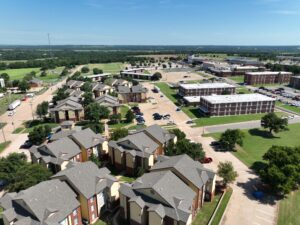
Perhaps most significantly, we are revolutionizing the HVAC systems through HEERF grant-funded projects across four residential communities. These improvements represent the most comprehensive housing upgrades in decades, and this large-scale project has proceeded at an extraordinary speed.
Centennial Court Apartments, Buildings 1-5, are receiving entirely new HVAC systems with redirected air delivery, finally addressing long-standing mechanical issues due to construction defects. Residents of Cimarron Gardens Apartments will experience, for the first time ever, thermostat-controlled central air conditioning, as we replace outdated window units and aged furnace infrastructure. Our construction partner, Nabholz Construction, is working to put the final touches on the upgrades within Centennial Court and Cimarron Gardens.
Commons Apartments and Scholars’ Inn will receive updated HVAC systems with state-of-the-art cooling. This project is also funded through the remaining institutional allocation of the HEERF grant. These systems will be installed throughout the Fall semester as equipment arrives.
Even facing unforeseen challenges due to supply chain setbacks and other compliance-related delays, we remain committed to completion with contingency plans in place to ensure all residential HVAC improvements are finished by December 30, 2025.
You may see our teams working to wrap up construction, replace sod, and clean the construction site. We ask for your patience as we continue this important work.
Infrastructure Modernization Projects
Our commitment to accessibility and safety continues with the ongoing Sanford Hall elevator modernization project. This project was initially proposed and approved in September 2024. In the intervening months, a great deal of work has occurred to procure the necessary equipment and prepare for its arrival and installation. This turnkey project entails electrical, telephonic, fire suppression, and mechanical upgrades for the elevator installation, which began on July 22, 2025. We anticipate a completion date in mid-August, contingent upon scheduling the required state inspection, after which time students and staff will have access to a fully modernized, reliable elevator system. Similar modernization projects for additional elevators throughout our campuses are already in the planning stages.
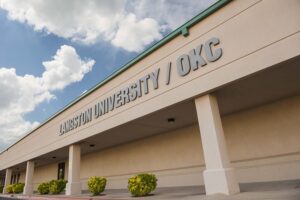
Protecting the LU-OKC Campus
Our Oklahoma City campus restoration continues with the roof replacement project, which is now moving through the final phases of procurement. The November 2024 storm that damaged our campus facility has since been classified by FEMA as a natural disaster. The University engaged with an architectural firm to develop detailed specifications for roof replacement which were utilized for competitive bid in the selection of our roofing partner. We are now working through bonding requirements to award the contract and initiate the project. While temporary roof repairs remain secure with interior restoration ongoing, a full roof replacement supported by OCAMP Deferred Maintenance funding and potential grant reimbursement will restore full protection for our campus in Oklahoma City.
Looking Forward
The work happening across our campuses demonstrates our commitment to providing an exceptional educational environment in support of student success and campus excellence.
As we continue this momentum throughout the academic year, the Division of Operations remains focused on progress, innovation, and the continuous improvement of our campus infrastructure. We will pursue additional projects with our FY26 OCAMP Deferred Maintenance allocation. Priorities will include electrical and utility upgrades, roadway repairs, elevator upgrades, and more. We anticipate the funding will be released by the state in September 2025. These investments in our physical environment directly support our mission of educational excellence and ensure that Langston University continues to provide world-class educational experiences for generations to come.
We thank our campus community for your patience during construction periods and look forward to the enhanced comfort and functionality these improvements will provide.
Theresa Powell Vice President, Division of Operations