Category: Sherman Lewis School of Agriculture and Applied Science

School flags lined up during commencement

Leading the Pride: Class of 2026 School Flag Bearers Share Their Stories

Release Provided By

(This story was originally published in ‘E Roar Digital Magazine | Vol. 3 Issue 4 on June 12, 2026)

by Ellie Melero

Langston University’s annual Commencement Ceremony is a joyous event filled with many meaningful traditions, and one of the most prized of these is the tradition of the School Flag Bearers. As the graduates process onto the field at the beginning of the ceremony, each academic school is led by their dean and one of their peers who carries the school flag. These coveted positions are awarded to the graduates with the highest grade point averages from each school. It is a recognition of their hard work and stellar academic performances throughout their time at Dear Langston. Meet the School Flag Bearers for the Class of 2026.
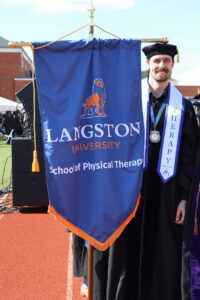
Jake Landes in doctoral regalia
Jake Landes was the Flag Bearer for the School of Physical Therapy.
Jake Landes

Doctor of Physical Therapy, School of Physical Therapy

Jake Landes has always believed in helping others. He grew up in Tonkawa, Oklahoma, and his small town upbringing taught him the importance of community and service. So when he graduated from the University of Central Oklahoma in 2023 with his B.S. in General Studies, after earning his associate’s in biomedical sciences from Northern Oklahoma College in 2020, it made sense to choose a career that was all about helping people.

“I chose physical therapy because I wanted to have the ability to have a direct impact on people’s quality of life,” Landes said. “Physical therapy combines science and critical thinking, allowing me to use my mind to solve complex problems and my hands as tools to help restore function, movement and independence.”

With this goal in mind, Langston University seemed like the perfect fit for Landes. The smaller class sizes appealed to him, and the program’s affordability made it feasible to pursue his dream of being a physical therapist. Additionally, the university’s values aligned with his own.

“I decided to attend Langston University School of Physical Therapy because of their focus on servant leadership, and the opportunity to be a part of a program that values clinical excellence and serving the underserved,” Landes said.

Landes excelled right from the beginning. His first year, his classmates elected him Class President. In this role, he advocated on behalf of his classmates and organized community service projects. In class, his professors mentored him. They guided him as he developed his clinical reasoning and professionalism, and they instilled confidence in him.

Landes built strong relationships with his classmates. They had class outings, both class-related and just for fun, and they attended the APTA Combined Sections Meeting in Houston together where they had the opportunity to network, learn and grow professionally. He said some of his favorite memories from the program were the late-night study sessions he hosted with his friends, as well as tailgating during Homecoming.

After graduation, Landes plans to work as a travel physical therapist to continue developing his clinical skills in different settings and communities. Eventually, he plans to transition into an outpatient clinic with the hopes of owning his own clinic one day.

“Langston University School of Physical Therapy has prepared me academically, clinically and professionally,” Landes said. “This program pushed me to develop strong clinical reasoning, confidence in patient care, and leadership skills that I will continue to develop into my career. Being selected as Flag Bearer represents not only my journey, but the support of my family, classmates, faculty and everyone who helped me along the way.”

Ereca Camero
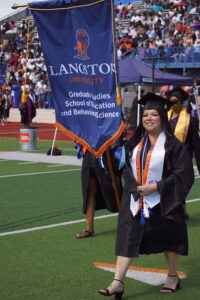
Ereca Camero in master's regalia
Ereca Camero was chosen as the Flag Bearer for Graduate Programs.

M.S. Rehabilitation Counseling, Graduate Programs

After graduating with her bachelor’s degree in psychology from Cameron University in 2021, Ereca Camero found her way into the field of tribal vocational rehabilitation services. In this line of work, she supports individuals with disabilities and mental health challenges in achieving their vocational goals. In 2024, she decided it was time to take the next step forward in her career.

That fall, she enrolled in Langston University’s Rehabilitation Counseling master’s program.

“I chose Rehabilitation Counseling because I am passionate about helping individuals overcome mental health challenges, disabilities and vocational barriers,” Camero said. “I wanted to develop the skills needed to support clients in achieving independence, stability and meaningful employment opportunities. And I chose Langston University because of its strong reputation for supporting diverse student populations and its commitment to academic excellence and community impact.”

Camero thrived at LU. Throughout her master’s program, she learned about applied counseling concepts through case studies and clinical practice scenarios which strengthened her understanding of client needs and evidence-based counseling approaches. The program’s faculty became her mentors, providing guidance, encouragement and valuable professional insight throughout her academic journey.

As she continued to perform well in her classes, Camero was invited to join Chi Sigma Iota Counseling Academic and Professional Honor Society International (CSI). The invitation was a recognition of her academic excellence and professional potential in the field of counseling, and she became a proud member of the Lambda Upsilon Chapter at Langston University.

After graduation, Camero plans to continue working in tribal vocational rehabilitation services while expanding her professional experience in counseling and advocacy.

“Langston University has thoroughly prepared me for my next steps by providing both academic knowledge and practical application in rehabilitation counseling,” Camero said. “The program has strengthened my confidence and readiness to continue to work in the field. Some of my favorite memories (from the program) include engaging in meaningful class discussions, collaborating with classmates on assignments and case studies, and growing both personally and professionally throughout the program. The relationships built with peers and faculty made the experience especially memorable.”

Kobe Law in graduation regalia
Kobe Law was the Flag Bearer for the School of Business.
Kobe Law

B.B.A. Management, School of Business

An Oklahoma City native, Kobe Law came to Langston University in Fall 2022 as a student athlete. He was a basketball player with interests in business and finance, and he knew Langston University was the perfect place for him to grow as an athlete and a young entrepreneur.

“I decided to attend Langston University because it offered a strong Black atmosphere, a supportive campus community and meaningful opportunities for leadership development,” Law said. “I began my journey at LU as a collegiate athlete on the basketball team through an athletic scholarship, which made Langston the right fit for both my academic and personal goals.”

Law majored in Business Administration–Management with a minor in finance. He chose those programs because he knew management would help him understand leadership and operations while finance would strengthen his ability to make strategic decisions and build long-term value.

During his time at LU, Law participated in several student organizations which he said helped him grow as a leader, communicator and more well-rounded person in professional settings. This included becoming the Co‑Founder and Director of Operations of the Langston University Collegiate Chapter of DECA, the Public Relations Chair for Gents, a member of Delta Mu Delta, a member of the National Society of Leadership and Success, a member of the Langston Chamber of Commerce and a student leader in the School of Business.

Law also participated in research as part of the Langston Community Plaza Feasibility Study, which aimed to integrate technology, business innovation and entertainment to create a vibrant community hub for families, entrepreneurs, students, visitors and professionals. Law presented his research in a pitch competition and won first place, receiving a $3,000 award and a three‑day trip to Washington, D.C., to attend the 2025 HBCU Entrepreneurship Empowerment Summit.

“My feasibility study evaluated the project’s potential by analyzing market demand, technical requirements, financial sustainability and operational feasibility,” Law said. “Through this project, I gained skills in first‑hand and second‑hand research, forecasting, project management and professional presentation.”

Law’s professors supported and encouraged him throughout his time at LU, and he considers Dean Daryl Green, Michael Hamilton and Dr. Charles Mambula to be his biggest mentors. After graduation, Law plans to become a project manager and pursue his MBA and a PMP License. Eventually, he wants to become a business consultant.

“Langston prepared me through rigorous coursework, mentorship and leadership experiences that strengthened my professionalism, discipline and strategic thinking,” Law said. “I’m proud to represent LU and excited to carry what I’ve learned here into the next chapter of my life.”

Delisha Carter
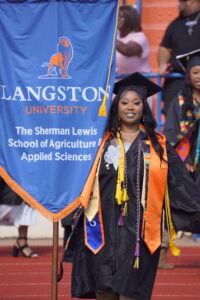
Delisha Carter in regalia
Delisha Carter was chosen as the Flag Bearer for the Sherman Lewis School of Agriculture and Applied Sciences.

B.S. Agribusiness, Sherman Lewis School of Agriculture and Applied Sciences

As a student at Landry Walker High School in New Orleans, Louisiana, Delisha Carter started her college search with the intent of studying accounting and finance. As she researched schools, LU stood out to her because it was Oklahoma’s only HBCU. Further research into the history of the institution, its campus life and its academic reputation convinced her to apply, and she was accepted with scholarships. She enrolled in Fall 2022, and Dear Langston quickly became a place she was happy to call home.

Carter got involved on campus right away. She has been a member of the Manners Club since 2022, serving as Vice President for the 2025–26 term. She has also served as the Public Relations Officer for the ABAC Club since 2024. Since Fall 2023, Carter has worked as a Resident Assistant, and she received the RA of the Year award, a Leadership Advocate Award and recognition for maintaining a 3.5 GPA within University Housing departments.

“Some of my favorite highlights at Langston have been the relationships I built with my friends, who have continuously motivated and supported me,” Carter said. “I also cherish the opportunities I’ve had to attend conferences and represent the university, as well as moments where I was able to lead and grow as a student leader.”

Carter made sure to take advantage of networking opportunities throughout her time in school, and she eventually met LU alumna Jateya Jackson. Jackson introduced Carter to the wide range of opportunities within the agriculture field, and Carter decided to change her major to Agribusiness with a minor in accounting.

“Since making that decision, I have not looked back,” Carter said. “I have grown to truly appreciate how diverse and impactful the field of agriculture is.”

After graduation, Carter plans to pursue a career in the corporate sector while working toward becoming a successful businesswoman. Her long-term goal is to own a real estate firm. Thanks to her professors, mentors and her advisor, Dr. Nyairo Newton, Carter is confident she’s prepared for what comes next.

“(Langston University) has shaped me into the woman I am today and has instilled in me the drive to continue striving for excellence,” Carter said. “I am thankful for the experiences, growth and opportunities that Langston has provided me. The long nights and early mornings have all led to this moment, and I am proud to carry the legacy forward.”

Samiya Robinson in regalia
Samiya Robinson was the Flag Bearer for the School of Arts and Sciences.
Samiya Robinson

B.A. English and B.B.A Finance, School of Arts and Sciences

Originally from Kansas City, Missouri, Samiya Robinson has always been familiar with Langston University because it’s her great aunt’s alma mater. She understood the unique cultural and historical significance LU holds as Oklahoma’s HBCU, so she decided to apply and was accepted into the Edwin P. McCabe Honors Program. She came to LU in Fall 2021.

Though she originally chose LU because of her McCabe Honors scholarship, she soon fell in love with Dear Langston, and she is proud to be part of the same legacy as her great aunt.

Planning to pursue a career in business, Robinson chose to double major in English and Finance. She chose Finance because she hoped to develop her analytical and strategic thinking skills, and she chose English because she saw the growth and transformation the department has experienced in recent years and wanted to be part of it.

“The English Department pushed me to expand beyond technical skills and really develop my voice, especially in terms of creative expression and rhetoric,” Robinson said. “Together, these programs have allowed me to think both analytically and critically, blending business strategy with creativity and communication in a way that I believe is essential for leadership.”

Robinson also worked to become a leader outside the classroom. She joined the Iota Chapter of Sigma Gamma Rho Sorority, Inc., in Spring 2022, and she said the sorority has been central to her leadership development and college experience. She has served as her chapter’s Vice President, President and Parliamentarian. She has also served as both a National Pan Hellenic Council and chapter delegate.

Beyond Greek life, Robinson worked in the LU Writing Center as a tutor and she served as the Community and Public Relations Chair for the School of Business. She is a Overnight Assistant for Residential Life and Housing Services. She is also a member of the National Society of Leadership and Success, the National Council of Negro Women, the School of Business Student Advisory Board, Sigma Tau Delta English Honor Society, and Delta Mu Delta International Business Honor Society.

After graduation, Robinson will head to Minnesota as part of the 2026 NBA x HBCU Fellowship. She will spend the summer working in Community Engagement with the Minnesota Lynx and Timberwolves organizations.

“My experience here has shaped me in ways that go far beyond academics,” Robinson said. “More than anything, Langston has taught me growth both personally and socially. The 22-year-old I am today exists because my 17-year-old self made the decision to step outside of her comfort zone and choose a school just four hours from home as a place to grow into who I am.”

Kaitlyn Mitchell
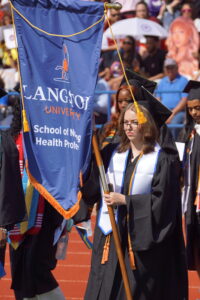
Kaitlyn Mitchell in graduation regalia walking with the School of Nursing and Health Professions' flag
Kaitlyn Mitchell was the Flag Bearer for the School of Nursing and Health Professions.

B.S. Nursing, School of Nursing and Health Professions

Kaitlyn Mitchell first discovered her passion for nursing as a student at Perry High School in Perry, Oklahoma. Her mother is a registered nurse, so she grew up with a lot of exposure to the field. When she got to high school, she decided she wanted to learn more. She took classes and became a Certified Nursing Assistant (CNA), and she continued working as a CNA until she graduated.

“I started working as a CNA in high school and fell in love with it,” Mitchell said. “I wanted to be able to do more for people, so I decided to become a nurse.”

Once Mitchell realized this was her calling, she started looking into nursing programs in Oklahoma. Her mother’s coworkers highly recommended Langston University, and it didn’t take Mitchell long to understand why.

She enrolled at LU in Fall 2022, and her professors made it clear early on that it would take a lot of hard work and dedication to earn her BSN. Mitchell was more than up for the challenge. She studied hard for her classes and made the most of her time in clinicals, and she excelled.

Outside of nursing, Mitchell was a member of the Edwin P. McCabe Honors Program, and she was also a member of the Langston University Quiz Bowl Team. She made friends and had fun, but school was her priority.

“Getting into the nursing program was a highlight (of my time at LU),” Mitchell said. “But also, I think nursing pinning and graduation will be my favorite memories since it highlights all my hard work paying off.”

After graduation, Mitchell plans to spend her first year focusing on being a newly graduated registered nurse and gaining experience. Later, she plans to continue her education to eventually become a nurse practitioner.

“I honestly feel like Dr. Hunter has done a good job preparing me for what comes next,” Mitchell said. “But I am absolutely glad it is over, and I made it to this point.”

Brooklyn Noiel in graduation regalia
Brooklyn Noiel was the Flag Bearer for the School of Education and Behavioral Sciences.
Brooklyn Noiel

B.A. Psychology and B.S. Corrections, School of Education and Behavioral Sciences

Originally from Oklahoma City, Brooklyn Noiel has always been a stellar student. She graduated in the top 10% of her class from Moore High School in 2022 before enrolling as a quad major–double bachelors in corrections and psychology and double associates in criminal justice and general studies–at Langston University that fall.

Noiel knew she wanted to be a lawyer, and she knew Langston University was the perfect place for her to earn her bachelor’s degree and prepare for law school.

“I decided to attend Langston University because it offers a strong sense of community, academic excellence and opportunities for personal growth,” Noiel said. “Attending Langston University allows me to grow academically, professionally and personally while being part of a legacy of excellence.”

From the beginning, Noiel was drawn to the supportive environment at LU. As Oklahoma’s HBCU, Langston University celebrates culture, develops leaders and empowers students to reach their highest potential. That’s exactly what Noiel wanted.

That supportive atmosphere helped Noiel excel in and out of the classroom.

She was an LU Ambassador, serving terms as the Historian and the Chief of Staff; a Resident Assistant; a member of Legal Lions, where she served as Treasurer; a member of Sigma Gamma Rho Sorority Incorporated, where she served as the Recording Secretary; and a member of the Scholar’s Club, where she was Secretary and Miss Scholars’ Club. She was also part of LU’s student chapters of the National Council of Negro Women and the National Association of Blacks in Criminal Justice. She sang in LU’s Concert Choir, serving as the Wardrobe Lead and President, and she participated in the Student Government Association Senate, where she served as an Associate Justice to the Chief Justice,

After graduation, Noiel will intern at MedPro Group as their Inclusion and Engagement Intern in Fort Wayne, Indiana. In addition to her internship, Noiel plans to study for the LSAT with hopes of attending law school in Fall 2027.

“I truly feel that Langston University has prepared me for what comes next,” Noiel said. “My time here has given me not only a strong academic foundation, but also the confidence, leadership skills and resilience needed to pursue my future goals. Through the support of faculty, staff and fellow students, I have grown personally and professionally, and I feel ready to take the next step toward law school and my career aspirations.”
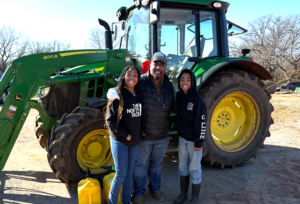
Cleaon Bradford poses with his children in front of a tractor

Paying it forward: Langston University alumnus dedicates career to helping Oklahoma farmers

Release Provided By

(This story was originally published in ‘E Roar | Vol. 2 Issue 5 on Sept. 12, 2025)

by Ellie Melero

It takes a lot to be a successful agribusinessman.

From hard, physical labor to the complexities of proper natural resource management, there’s more to it than most people would think, and no one knows that better than Cleaon Bradford.

A native of Boley, Oklahoma, Bradford has been in the agribusiness industry his entire life. He has spent countless hours meeting with people, learning about best practices and available resources, and doing whatever was needed to build a thriving cattle farm in his hometown. Throughout it all, he has also spent his 21-year career with the United States Department of Agriculture (USDA) helping other Oklahoma farmers do the same.

“Just as I was able to receive it, I want those individuals to be able to have those opportunities as well,” Bradford said.

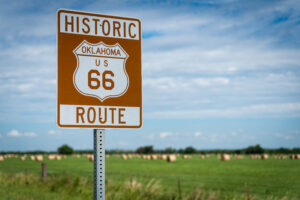
photo of Oklahoma route 66 sign in front of a field
Like most Oklahomans, Bradford was exposed to Oklahoma’s thriving agriculture industry at a young age.
Photo credit: Michael Flippo/AdobeStock.

Like most Oklahomans, Bradford was exposed to Oklahoma’s thriving agriculture industry at a young age. He came from a family of farmers, and he was active in 4-H. He knew he wanted to own his own farm one day, so he took every opportunity he could to learn more about the industry.

His senior year of high school, as the president of his local 4-H club, Bradford attended the Retired Educators for Youth Agriculture Program at Oklahoma State University. Through his participation in the program, he was able to secure an internship with the USDA.

He spent the summer working for the local USDA office where he learned about natural resource conservation. He decided that was what he wanted to do with his life, so he began making plans for after high school.

Growing up in Boley, Bradford was familiar with Langston University and the opportunities it could provide, especially in the realm of agricultural research and education. So when he received a national scholarship from the Bureau of Reclamation, it was an easy decision to go to LU to study natural resource management.

“It was the college to go to,” Bradford said. “People spoke highly of it. It was a school where you were going to not only get your education, but you’d kind of feel like people cared about you and wanted you to succeed.”

Although he was getting ready to move for school, Bradford still hadn’t given up on his dream of owning his own farm. Actually, he was more motivated than ever. Not long after his high school graduation, 18-year-old Bradford secured a loan to lease land and purchase his first cattle stock, marking the beginning of his cattle production operation in Boley.

In addition to raising the livestock, he also grew and bailed hay with which to feed the animals in the winter. It was hard work, and he wouldn’t have been able to do it without the help and support of his family. He relied on that help even more when he began at Langston University in the fall of 2000.

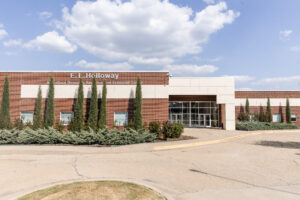
Photo of the E.L. Holloway Building
Bradford was very involved with SAAS as a student, and to him, SAAS felt like its own club. He applied what he learned in class to his own farm throughout school.

Bradford was dedicated to his farm, but he was even more dedicated to his studies. He wasted no time when he arrived on the Langston Campus, determined to get involved in the School of Agriculture and Applied Sciences (SAAS) every chance he had. For him, going to classes and attending events wasn’t just about getting a degree; it was about learning concepts and skills that he could turn around and apply on his farm.

“For me, it was just very encouraging that the things I was learning, I was able to use that on my own operation,” Bradford said. “That desire to learn and be successful in agriculture is one of the things that just really drove me.”

To anyone who met him, Bradford’s motivation to learn inside and outside the classroom was evident. Sherman Lewis, the LU alumnus and former USDA employee for whom SAAS is now named, worked at Langston University when Bradford was a student. He said Bradford’s potential was evident from the beginning.

According to Lewis, young Bradford had a strong work ethic and even stronger moral character. He knew Bradford would be successful in whatever career he chose, so he tried to encourage and support Bradford throughout their shared time at Dear Langston.

“He’s an outstanding young man,” Lewis said. “His work is always above and beyond any reproach, he’s always been a very hard worker, and he’s committed to doing what is necessary to make sure he gets the job done. And you know, he’s been that way from the day I met him.”

Bradford said the support he received from Lewis and the other faculty and staff in SAAS is part of why he thrived in college. From the beginning, SAAS felt like its own club where everyone wanted one another to succeed, and he had it drilled into his mind not to waste the opportunities LU provides.

He attended the semiannual career fair his freshman year where he spoke to recruiters from the USDA Natural Resource Conservation Service (NRCS) in Oklahoma. They told him about the USDA Student Career Experience Program, now called the Pathways Internship Program, which is a year-round paid internship for students that offers a guaranteed full-time job upon graduation to those who complete a minimum number of hours in the program.

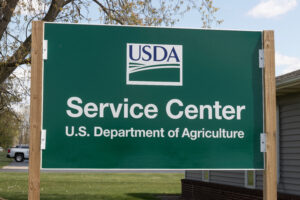
A photo of a USDA Service Center sign
Bradford interned with the USDA throughout college and accepted a job offer from the USDA’s Natural Resource Conservation Service after graduation.
Photo Credit: jetcityimage/AdobeStock

He applied and, having already completed a USDA internship in high school, was readily accepted to the program. He was grateful for the experience and extra income the internship provided, but balancing his classes, his job and his farm was challenging.

“I was a very busy student,” Bradford said. “People used to say to me, ‘Man, you’re just real serious.’ And I’d say, ‘You know what? I am.’ I really took things serious, and I really wanted to take advantage of my time out there and really be successful.”

Bradford graduated in 2004 and accepted a job offer from NRCS as a Soil Conservationist in Wewoka, Oklahoma. He later became a district conservationist and served in roles as a supervisor and a team lead. Now, he’s the Outreach Coordinator for NRCS Oklahoma.

A large part of his job boils down to making sure Oklahoma’s producers are aware of the resources available to them through NRCS and helping them take advantage of what’s there when they need it. From guiding them to NRCS’ technical support to educating them about financial assistance programs, Bradford spends his days trying to help Oklahoma’s farmers.

As with many aspects of the agricultural industry, the work may not be glamourous, but Bradford said it’s rewarding. In every position he has held with NRCS, he has always enjoyed the outreach aspect of the job. He likes going out into the field and being with the farmers. He likes talking with them, working through their problems, and knowing at the end of the day he is helping people become successful agribusinessmen/women.

“I can look back at the times we put on an outreach event or had something going on, and you hear from the producers about how you helped them, helped their operation,” Bradford said. “That’s always rewarding.”

Agribusiness is one of the largest industries in Oklahoma. Nearly 75% of the state is farmland, and it produces $1.8 billion in agricultural exports per year while being one of the nation’s top producers of beef and rye, according to the Oklahoma Department of Commerce. Having spent his own career in the USDA, Lewis knows the systems that support this high level of agricultural industry are themselves held up by the people who work for them. People like Bradford.

Lewis worked at the NRCS’ national office in Washington, D.C., not long after Bradford graduated from LU, and he kept tabs on Bradford’s progress through the organization. He spoke with people from NRCS Oklahoma and other agencies who all knew Bradford and spoke highly of him.

a photo of Cleaon Bradford
Bradford has dedicated his career to helping Oklahoma’s farmers. As a fellow farmer, Bradford works every day to uplift Oklahoma’s agriculture industry.

According to Lewis, Bradford excelled not only at the technical aspects of his job, but also the relationship-building aspects. As he moved through the ranks, he did what he could to help newer employees succeed so they could help their constituents succeed. He even served as the president of the Oklahoma chapter of the National Organization of Professional Black NRCS Employees, an organization dedicated to mentoring young professionals in the workplace.

The combination of his skilled fieldwork and successful professional relationships have allowed him to have a broad impact on NRCS and Oklahoma agriculture.

“Any time you’re out there on the ground, working with individual farmers and assisting them, educating them and conserving a natural resource base, you’re doing something for the overall health and welfare of agriculture here in the state of Oklahoma,” Lewis said. “That’s what Cleaon has been doing. He’s touched the lives of many, many farmers.”

Throughout it all, Bradford has continued farming.

Every day, he goes to work with NRCS, then drives to Boley to tend to his herd before going home to his wife and kids. Over the years, he bought land as it became available, and with the help of his family––especially his father––he continues to grow his cattle and hay operation.

The farm is important to Bradford for many reasons. It’s a way for him to connect with his children and teach them practical skills. It’s a way for him to provide for their future. It’s tangible evidence of the hard work he’s done over two and half decades. And it’s a way for him to show others that it’s possible to be successful in an industry that can sometimes feel like too much.

“I want to continue to grow and master being in the ag business,” Bradford said. “I want to be a successful agribusinessman and be able to show that success, shine a light on the potential, the possibilities, the opportunities and make sure I’m educating others.

“Throughout my life, I want to make sure I spread that knowledge and encourage the future for people who want to get involved with agriculture.”

The Keeper of Keepers: LU Honeybee Extension Supports Oklahoma Bees and Farmers

Release Provided By

(This story was originally published in ‘E Roar | Volume 2 Issue 5 on Sept. 12, 2025)

By Jet Turner

As dusk turns to dark, the last of us buzz our way back into the hive to rest for the night. This time, the doors close behind us. Unusual, but not an issue. We settle into our honeycombs, awaiting the morning sun.

A jarring of the hive awakes us in the morning. Strange noises come from the outside. The rattling finally ends and our home stands still for a moment until rhythmic vibrations shake the colony.

Before long the vibrations cease. Those same jarring movements follow, but quickly end. The hive is still.

Finally, the doors open and we stretch our wings, leaving the hive in droves. We don’t recognize where we are, so we fly in figure eights, trying to get our bearings. Slowly, we are able to inch further and further away from our home and into a new land where new nectar awaits–all in support of our queen and colony.


While this scene may seem dramatic, in a couple of days the honeybees within this colony will adjust to their new environment and continue with their normal duties, unaware of the tremendous benefit they are providing to the crops surrounding their hives and the farmers who harvest them.

From hobbyists to commercial growers, relocating honeybee colonies is just one of the many ways the Langston University honeybee extension program helps people all across Oklahoma.

Hank Baker, the honeybee extension educator and administrator of research at Langston University, said simply placing one honeybee colony in front of crops can increase yields by 60-70%. While bees are an excellent resource for agriculturalists, beekeeping is full of challenges. Without proper training, many will quit.

“With honeybees and their management, there’s a really large learning curve,” Baker said. “Almost 80% (of people) that get into honeybees quit within the first three years. They’ll quit because they don’t have any help. Their bees will die in the first year, and they’ll try again, and then their bees will die again, and they’ll try it again.”

Anyone can find beekeeping training programs and resources online, but that material pales in comparison to hands-on training in the field.

This is where Langston University’s honeybee extension program excels.

“One of the things that I pride ourselves on in our program is we go in and we help those farmers manage their colonies so they have successes instead of failures,” Baker said. “I am out in the field every day. I probably call on half a dozen farmers a day, showing up and going through those colonies with them.

“You’ll learn more in an hour-long visit than from a six-month class.”

Although this program has only been around for about a year and a half, Baker’s hands-on approach to helping Oklahomans with their honeybee colonies has already made a difference.

A disabled veteran from Kingfisher County, who uses beekeeping as a therapeutic hobby, enjoyed nothing more than sitting on the porch and watching his bees. One day, he discovered all six of his colonies were in trouble, so he called Baker for support.

Baker traveled out to the veteran’s home to see if he could help save the colonies, but unfortunately, there were almost no bees left.

Within 7-10 business days, Baker had two new colonies installed in the bee boxes the veteran already owned. Now, Baker receives regular text messages and calls from the veteran thanking him for his help and updating him on the bees.

A beekeeper in Choctaw told Baker he has quadrupled his honey production just from Baker going on-location to help him over the last year.

A farmer from Wetumpka and her husband have been gardening for years, and often sell their produce at the Norman farmers market. They recently lost all but one of their six honeybee colonies. Baker visited the farmers and quickly installed new colonies and new queens. Now, their business is back up and running, and the couple stay in regular contact with Baker about the status of their bees.

These are just a couple of instances where Baker and the honeybee extension program have made a difference. Baker helps people tend to their honeybees in all 77 Oklahoma counties and has reached over 500 individuals through various programs and workshops. These include on-site farm visits and LU campus workshops as well as collaborations with other organizations such as Oklahoma State University, Hives for Heroes, local elementary schools and nearby cities, performing services and workshops off campus.

“The farmers that we help, I usually pay them a visit about once a month,” Baker said. “So after about six visits, they’re getting a pretty good handle on (beekeeping) and they don’t need as much help. Then, they start to mentor other people around them. It kind of snowballs from there.”

The Langston University honeybee extension program also assists public parks and other similar spaces, for a bees role as a pollinator keeps the park grass and other vegetation healthy and lively.

Recently, Baker helped Scissortail Park in Oklahoma City escape a vicious cycle. Each year the park bought new bees because their colonies would die in the winter.

Baker was asked to come evaluate the bees, and he discovered the colonies were not producing enough wax for the queen to lay eggs in. He took several frames from the bee boxes home and heavily hand waxed them. Now, the bee population in the park is able to expand, and the park no longer needs to buy new queens every year.

While detailed data is still being gathered, preliminary outcomes indicate measurable economic benefits to Oklahomans, such as increased income and productivity among participants. According to stakeholders, the average income increase for program participants has grown substantially, reflecting gains in produce output, honey production, sustainable honeybee populations and entrepreneurial success.

“I’m proud of the quality of outreach that we do,” Baker said. “Its only been a year and a half, and the quality of work that we’re performing in the field and the number of people we are helping is tremendous.” 

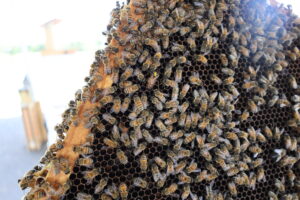
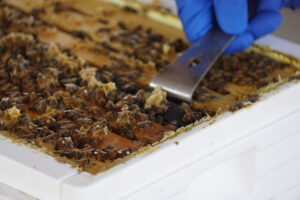
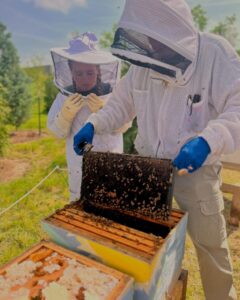
A hook removing panels from a beehive.Hank Baker, in beekeeping gear, shows a student how to remove panels from a beehive. A colony of bees on a beehive panel

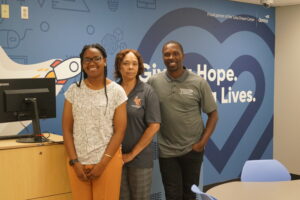
group poses in front of TDC mural

Keep Dreaming: Langston University Cooperative Extension partners with Tulsa Dream Center to bring STEM opportunities to Tulsa children

Release Provided By

(This story was originally published in ‘E Roar | Volume 2 Issue 5 on Sept. 12, 2025)

by Ellie Melero

It was a bright and clear Tuesday morning, and Tulsa was just starting to heat up under Oklahoma’s unforgiving summer sun. In the north part of the city, cars drove with their windows down and people walked on sunbaked concrete sidewalks as they made their way to the Tulsa Dream Center.

Despite the early hour, the north campus of the Tulsa Dream Center (TDC) was already a hive of activity. The lobby was filled with people hoping to take advantage of one of the many services TDC provides the community. Across the parking lot, volunteers were getting ready for the twice-weekly grocery giveaway. On the second floor of the Center, there were classrooms full of eager children waiting to see what activity they were about to do with Langston University.

For six weeks in June and July, the Department of Family and Consumer Sciences (FCS)–a part of LU’s Cooperative Extension and Outreach Programs through the Sherman Lewis School of Agriculture and Applied Sciences–hosted interactive STEM workshops for the TDC’s Dream Academy Summer Camp. The activities ranged from sewing classes to basic coding lessons, and they were always a highlight of the week for the kids.

“The kids, they loved it,” said Pastor Tim Newton, the executive director of TDC. “They’re experiencing things and seeing things that they otherwise wouldn’t have known even existed.”

LU Extension has worked with TDC a handful of times over the past three years, but both groups have wanted to expand the partnership for a while. This year, they took the first step forward by collaborating on TDC’s spring and summer day camps, and the partnership will continue growing as LU Extension grows its footprint in Tulsa.

It all started with STEM Field Day.

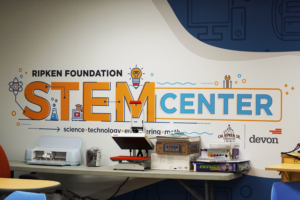
a mural inside the Tulsa Dream Center's STEM Center
The activities LU Cooperative Extension puts on are helping TDC kids build foundational knowledge in STEM and teaching them important life skills.

For several years, Extension Educator Shar Carter has organized a STEM Field Day in Tulsa at a local butterfly farm. She works with the statewide FCS team and collaborates with other LU departments, local schools and outside organizations to put on free, fun and engaging educational activities for the kids, such as demonstrations from Langston University’s Drone Technology and Precision Agriculture program.

In 2022, STEM Field Day fell on Monroe Middle School’s fall break, so Carter had an opening for 100 students to attend the event. She reached out to TDC to see if they would be interested, and Pastor Tim wasted no time gathering kids to fill the open spots.

“He was like, ‘I can get you kids,’” Carter said. “And from then on, we’ve been working with the Dream Center. They are just a feeder for so many schools in Tulsa that it just made sense.”

TDC is one of the largest providers of after school childcare in Tulsa, and it serves between 700–1,000 kids daily. The average household income for these families is $27,000 per year. Because of its reach, Carter knew working with TDC would be a strategic partnership for LU Extension.

This spring, Carter approached Dr. Tiffany Williams, the program leader for Family and Consumer Sciences, about an opportunity to grow their existing relationship with TDC. Dr. Williams was immediately on board.

“The needs of the youth as well as the adults who attend TDC closely align with the outreach mission of our cooperative extension program,” Dr. Williams said. “Shar recognized this and developed a partnership with TDC to implement the Children, Youth and Families at Risk program. She thought that would be a great way to really start this partnership between Langston and TDC, and she spearheaded developing that partnership.”

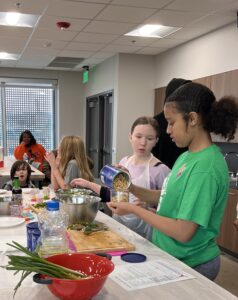
Pastor Tim had invited FCS to be a part of TDC’s spring break day camp in March, so Carter and Dr. Williams decided to do a week-long culinary camp for the kids. They worked with a professional chef to develop the program, and every day they taught the kids how to prepare healthy and delicious meals. They even sent the kids home with leftovers to share with their families.

As is her forte, Carter had fun explaining to the kids how everything from the fractions they used to measure ingredients to the chemical reactions as the food cooked tied back to STEM. For Dr. Williams, the camp was about educating the kids about healthy eating and motivating them to share the knowledge with their families. For Pastor Tim, it was about getting the kids excited to learn.

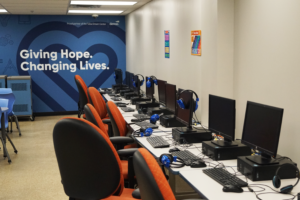
A row of computers inside the Tulsa Dream Center's STEM center
TDC is one of the largest providers of after school childcare in Tulsa, and it serves between 700–1,000 kids daily. Because of its reach, Carter knew working with TDC would be a strategic partnership for LU Extension.

The culinary camp was such a success that Pastor Tim asked them to come back for the Dream Academy Summer Camp. FCS takes a wholistic approach to education, focusing on teaching people of all ages important life skills, so Dr. Williams and Carter got the other extension departments involved. They did different activities every week, and Carter said the kids didn’t even realize how much they were learning.

“I tie everything that we do back to math, critical thinking and reading comprehension,” Carter said. “I think youth learn better if they’re having fun.”

One of Pastor Tim’s primary goals for TDC’s educational programs is to expand the kids’ minds, and he says the activities they do with LU go a long way toward achieving that goal. Not only does LU Extension make learning fun, but it also exposes them to new things they would probably never interact with otherwise.

In addition to helping them build foundational knowledge in areas like agriculture and food science, Pastor Tim said LU Extension is inspiring the students to pursue new interests. He anticipates there will be a long-term economic impact from this partnership as the children grow up and become more motivated, confident and prepared to pursue a higher education.

“As those kids get exposed to those things, they’ll be able to leave here, earn a good education, earn wages, and be able to come back into this community,” Pastor Tim said. “It will change the trajectory of this community, and really, that’s the goal.

Since the spring, the collaborations between LU and TDC have been steadily increasing. Thanks to the cooperative efforts of the statewide FCS team under Dr. Williams’ leadership, Community Resource Development’s Joshua Davis, LU Extension’s leadership team and Pastor Tim, LU and TDC have completed several community projects and begun work planning more

Over the summer, they planted a community garden at TDC’s north campus, which will serve not only as an educational tool for future Dream Academy programming but also to address food insecurity issues in an area considered a food desert.

Dr. Williams has created a nutrition education initiative to teach TDC’s constituents about healthy eating, and she recently launched a nutrition education website that is a prototype for an app.

Carter is working to start a quilting club for community members of all ages, and she hopes to offer more fiber arts programming as the resources become available.

LU Cooperative Extension and Outreach hired a new 4-H educator, Marquisha Thomas, to bring LU’s 4-H and Youth Development programs to TDC.

These are just some of what the group has accomplished through this partnership, and they are continually exploring new ways to collaborate for the good of the community. As Langston University’s Cooperative Extension works to expand its programs around Tulsa, Carter, Dr. Williams and Pastor Tim are excited to see what the future holds.

Josie Throckmorton pilots a drone

Pastures and Progress: Josie Throckmorton’s Journey to Shape the Future of Agriculture

Release Provided By

(This story was originally published in ‘E Roar | Vol. 2 Issue 5 on Sept. 12, 2025)

by Jet Turner

The morning sunrise bleeds orange and blue hues as its light crests over the foothills of the Ozark Mountains. Its rays reach through her bedroom curtains as the rooster crows, but Josie Throckmorton isn’t focused on the noise; she is focused on the peace and tranquility of waking up on her grandparents’ farm.

She crawls out of bed to begin her chores. The morning dew has made the hay too damp to harvest just yet, so Josie focuses on feeding the animals. The horses neigh and whinny, the cattle stir, the dogs get ready for the day, and even the cats quit their morning lounge as she approaches with their food.

Eventually the dew evaporates and it’s time to harvest the hay. At this young age, Josie is too little to reach the pedals of the hay truck, so her sister drives while she uses her hands on the pedals to brake and accelerate.

Josie doesn’t remember when she learned to do these things. She’s been riding horses since before she could walk and has helped take care of the animals and harvest the fields from the moment she could.

Josie grew up with these animals, and she grew up working the land.

Fog and shadows creating color gradients of the Arkansas Ozark Mountains at Sunrise.
Josie grew up in the Ozark Mountain foothills, where she learned to tend to the land and animals on her grandparent’s farm.

But this isn’t just any land they work. This land where the sky is so clear, where the stars are so bright at night you can literally watch the world spin around you, where even the air feels different, was the original Native American allotment of land given to Josie’s Cherokee ancestors when they signed the Dawes Rolls after walking from North Carolina down the Trail of Tears.

“Whenever you’re out there it’s like there’s not a care in the world,” Josie said. “There’s nothing else that matters except for that land and your family that’s built it.”

Josie and her family lived in those Ozark Mountain foothills until her father, Dusty, received an opportunity to be the assistant principal of Guthrie High School. Josie was about to start the third grade when they moved.

Learning is deeply ingrained into the Throckmorton’s family culture. Dusty and his wife Marjorie, who are each educators, made sure of it. Growing up on a farm taught their children to solve problems in real time, learn by doing and understand complex processes, among many other skills.

Marjorie and Dusty were training their daughters, of which they have three, for independence.

“When a kid’s raised on a farm, they’re exposed to more things than a kid that is less fortunate,” Dusty said. “I think it’s the richest environment to raise a child in.

“Whatever a young set of hands could do, we didn’t shy away from. We heated our house with 100% wood until (Josie) was 8 years old. So once a week, we were felling a tree, we’re getting the wood splitter, we’re cutting wood with a chainsaw, and I’d let the girls run the splitter. They’re stacking wood, they’re picking up sticks, they’re raking the yard.”

Dusty realizes that’s probably a heavier responsibility than most 8-year-olds are used to, but responsibilities like these laid the foundation for Josie’s work ethic, her love for learning, and her respect for the land she works and the agriculture that cultivates it.

After moving to Guthrie, the Throckmortons began working for Davis Farms in Logan County. There, they tended to the farm’s dry cows. Here, Josie learned how to show cows in addition to her other responsibilities.

When it came to her formal education, Josie’s parents always emphasized the role of meaningful, hands-on experiences outside of regular course work. They would tell her to, “Not let school get in the way of your education.”

They also told her, “You get out of school what you put into it,” a lesson that influenced how Josie interacted with her teachers and kept her involved in a multitude of extracurricular activities, such as 4H and track and field.

College was the next step for Josie upon graduating high school. She knew she wanted to study agriculture, and as she weighed her options, Langston University became a natural fit for her.

“Honestly, I came (to Langston University) for the agriculture program,” Josie said. “I wanted a small school where I wouldn’t be just a number. I wanted the professors to know who I am, and I wanted to know who they were. So, I came to Langston to deep dive into the ag program with all of the research that they have because Langston is known for their agriculture research. I came to get into that research and have a personal relationship with the people that are teaching me.”

Langston University was named a Research College and University by the Carnegie Classification of Higher Education Institutions in March, emphasizing the focus of research for the institution. Additionally, Langston University has a student-to-faculty ratio of about 17:1 and continues to be the most affordable four-year institution in Oklahoma.

Josie hit the ground running when she arrived to campus during the Fall 2022 semester, ensuring she introduced herself to professors, shared her interests with them and got involved where she could.

Throughout her time at LU, Josie has been involved in honeybee research under Dr. Malcolm McCallum and honeybee extension educator Hank Baker, and horticulture research under Dr. Tracey Payton. But what might end up defining her time at Langston University is the work she has done with the Drone Technology and Precision Agriculture team.

The Drone Technology and Precision Agriculture team is made up of Langston University students conducting research with drones. The goal of this research is to develop a smart but inexpensive drone that can help manage livestock and pastures for farmers. Dr. Leonard Kibet serves as the primary investigator.

Instructor Marcio White formally met Josie for the first time about two years ago at a Sherman Lewis School of Agriculture and Applied Sciences (SL/SAAS) event but had seen her around before because she was always at leadership meetings.

It was here where White approached Josie about the work the Drone Technology and Precision Agriculture team was doing. Josie was immediately interested, and after a couple of meetings she was voted onto the team by its existing members.

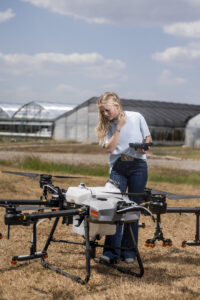
Josie Throckmorton looking at a large drone in a field.
Josie is in charge of the pasture management component of the project and flies missions with the spray drone, seen here.

Josie is the Nutritive Differential Vegetation Index (NDVI) Specialist on the team. She is in charge of the pasture management component of the project and flies missions with the spray drone, which can very precisely––down to the inch––apply fertilizer, pesticide, herbicide and insecticide to a crop to ensure that only specific spots are targeted so no extra chemicals enter the land.

The Drone Technology and Precision Agriculture team has existed at Langston University for about 6 years, but White said this year’s team may be the best ever assembled, and Josie is a huge contributor to that fact.

“(Josie) has great character, and she has a brilliant intelligence,” White said. “She’s a dedicated hard worker, she’s committed to what she’s doing, punctual, and she’s very good at communicating not only her ideas, but how she feels about things. And she’s also a leader.”

White described Josie as a “participative type leader,” one who is always willing to get in and do the work, leading by example wherever she can.

As long as the Drone Technology and Precision Agriculture team has been at Langston University, White has tried to convince his students to study for and earn their commercial drone pilot license. His efforts were unsuccessful until this past Spring when, unknown to him, Josie began to study for her license.

Later that semester, Josie passed all tests and became the first active Langston University student to earn their commercial drone pilot license.

When she originally began planning her future career, Josie only wanted to preserve her family’s agricultural heritage and their ancestorial Cherokee allotment of land for future generations, but that passion has expanded.

Now, as Josie prepares to graduate in May, she sees herself bridging the gap between the traditional farming methods she learned on her grandparents’ land so long ago and new technologies like the drones she flies today.

“To us, that land is more of a sign of God’s provision for our family,” Josie said. “We know that we’ve been looked after and given so much, so what we hope to do is to keep this land in our family so that that whole story and that sacrifice and all the turmoil and hardships that my Cherokee ancestors faced is still alive in us today, and that we don’t forget the things that they went through to give us the stuff that we do have. I want to preserve that land so that my kids and my grandkids can grow up running around in the creeks, up and down in the hollers and in the hay fields and fishing in the ponds, just like I did, and just like all of my ancestors before me.

“What I want to do for the rest of my life is talk to people and educate them on what the future of agriculture is, what their role is in it, and how to preserve what they already have.”

Code Blooded poses for a group photo in front of Moore Hall

Code Blooded: Langston University students compete in national Cyber Games competition

Release Provided By

by Ellie Melero

Dazjuan Johnson can’t wait for the 1890 Cyber + AI Games.

Planned as part of the Second Morrill Act 135th Anniversary celebrations, the 1890 Cyber + AI Games are a national cyber capture-the-flag competition that will be held at the University of the District of Columbia on Sept. 9. They may not be a flashy spectacle like College Football Gamedays, but they will be fiercely competitive and exciting for anyone with an interest in cybersecurity or artificial intelligence. And Johnson can’t wait to play.

“I’m looking forward to testing our skills on a national stage, learning from other teams and representing Dear Langston with pride,” Johnson said.

A senior computer science major at Langston University, Johnson is one of six LU students who will make the trip to Washington, D.C., for the competition. These skilled student coders are all part of Code Blooded, LU’s cyber competition team.

Code Blooded regularly competes in events like code-a-thons and cybersecurity competitions, and they’ve even beaten teams from Ivy League schools like Yale in the past. This will be Code Blooded’s first challenge with its new team lineup for the 2025-26 school year, and it will be Johnson’s first competition with the team.

“It’s been an exciting and fast-paced experience, pushing me to sharpen my skills and collaborate closely with talented peers,” Johnson said. “I’m grateful for this opportunity and confident it will be a valuable step toward my future in tech and cybersecurity.”

Twenty teams from each of the 1890 Land-Grant Institutions plus the host school will participate in the 1890 Cyber + AI Games. They will be held in a capture-the-flag jeopardy style format, testing students’ skills in areas such as digital forensics, reconnaissance and geo-tagging.

The theme for the Games will be Agriterrorism. The teams will be given a hypothetical scenario in which there has been a disruption to the U.S.’s food supply chain through the introduction of biological, chemical, physical or cyber-physical threats via malware, ransomware, sensor/actuator tampering, network intrusions, phishing or social engineering. The students will have to work together to resolve the scenario.

Ralph Grayson, the chair of LU’s Department of Computer Science and Code Blooded’s coach, said the six members of the competition team were chosen because they each have an expertise in a different area that will be featured in the competition. Having students with a variety of skill sets makes the team more well-rounded and competitive.

“Competitions are always great because we want them to get used to what happens in the workforce,” Grayson said. “In the workforce, you have to work on teams, and there are always issues that come up. They have to work well together, and they have to develop and execute skills that they may not have had before.”

Selam Terefe, a junior computer science major, has been on Code Blooded since his freshman year, but he’s never competed in an event quite like this. That’s because this will be the first 1890 Cyber + AI Games.

Put on by Katzcy PlayCyber and the 1890 Universities Foundation, the 1890 Cyber + AI Games were created as part of the Second Morrill Act anniversary celebrations. They are intended to highlight the growing need for cybersecurity in agriculture, leading to the theme of Agriterrorism.

As Code Blooded prepares for the Games, Johnson and Terefe have reflected on the theme and what opportunities there are for computer science students in agriculture. They’re thankful for the opportunity to participate, and now, they’re ready to compete.

“I believe it is a great opportunity for HBCU students interested in the intersection of agriculture, artificial intelligence and cyber defense to get hands-on exposure and connect with peers with the same interest,” Terefe said. “I would like to thank Langston University’s Sherman Lewis School of Agriculture & Applied Sciences and the Computer Science department for giving us this opportunity.”

Langston University Cooperative Extension and Outreach Program makes plans to expand services to 48 Oklahoma counties in 2026

Release Provided By

LANGSTON, Okla.––Thanks to the efforts of the Oklahoma Legislature to fully match Langston University’s Evans-Allen federal funding, the LU Cooperative Extension and Outreach Program (CEOP) is preparing to expand its services to two new counties while increasing its program offerings in counties it already serves.
With the additions of Woodward and Johnston Counties, CEOP will offer extension programs in 48 of the 77 counties in Oklahoma. CEOP’s programs offer vital services to these communities, providing resources in areas ranging from family and youth development to a wide range of food and agricultural support. Dr. Roger Merkel, Associate Extension Administrator for CEOP, said that by expanding its services, CEOP seeks to fulfill its mission of advancing the well-being of Oklahomans and fostering resilient, thriving communities across the state.
“The Cooperative Extension and Outreach Program of the Sherman Lewis School of Agriculture and Applied Sciences is committed to serving the citizens of Oklahoma by promoting improved quality of life, enhancing agricultural and business productivity, and fostering community development,” Dr. Merkel said. “Central to the mission of Extension is the cultivation of meaningful human connections. Extension educators prioritize the establishment of respectful, supportive relationships that yield measurable, positive outcomes in the communities they serve.”
The Oklahoma Department of Agriculture, Food and Forestry (ODAFF) fully matched Langston University’s Evans-Allen federal funding for the first time in FY 2025, and ODAFF made strides to maintain the full match for FY 2026 by increasing CEOP’s state funding. Thanks to this full funding match, CEOP is strategically expanding its services throughout Oklahoma through investments in essential resources such as personnel, transportation, technology, program supplies, professional development opportunities and other forms of operational support.
With enhanced resources, the program intends to both broaden existing initiatives and implement new, impactful activities. Anticipated outcomes include:
This expansion effort is one of the ways in which Langston University aims to broaden its impact in Oklahoma through its land-grant mission.
“Langston University is grateful for its enhanced funding,” said Dr. Wesley Whittaker, Dean of the Sherman Lewis School of Agriculture and Applied Sciences. “Consumers, producers and industry professionals recognize that funding for agricultural extension and research in Oklahoma creates value on many levels. It helps to develop new revenue streams for farmers and ranchers, expand value-added products, encourage diversified agricultural practices and strengthen the competitiveness of Oklahoma agriculture.
“Our dedicated team is energized and ready to do all that is necessary to ensure impactful outcomes from our work.”
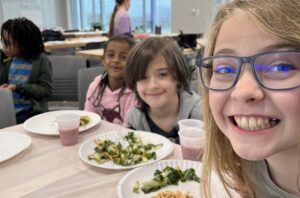
children in 4H smile while holding their plates of homegrown and prepared food

Seeds for the Future: LU’s 4-H programs teach kids life skills

Release Provided By

(This story was originally published in ‘E Roar Digital Magazine | Volume 2 Issue 1)

by Ellie Melero

Yellow squash, zucchini, bell peppers and parmesan cheese. These are ingredients used to make a simple but nutritious squash skillet like the ones 4-H students made in the Junior Master Gardeners program at Langston University.

Junior Master Gardeners, or JMG, is an international program and curriculum that teaches kids about growing their own food to support healthy lifestyles. Kids learn about everything from the best times of year to plant seeds for different fruits and vegetables to the proper knife skills needed to prepare the veggies for cooking.

The curriculum is filled with hands-on activities and opportunities to try new foods, making it popular among the members of the Roaring Adventures 4-H Club in Langston, Oklahoma.

“I think that’s what was so important about 4-H is that that’s what they promote,” said Donnesha Williams, the 4-H educator in charge of the Roaring Adventures Club. “It’s positive youth development through hands-on learning, through hands-on engagements.”

4-H, the largest youth development program in the United States, is operated by Cooperative Extension at public land grant institutions across the country, including at Langston University. The Sherman Lewis School of Agriculture and Applied Sciences operates three 4-H clubs in Oklahoma, providing opportunities for kids from elementary through high school to engage with their communities and learn life skills.

4-H members prepare green beans at the Langston University Horticulture Education and Research Center
The Roaring Adventures 4-H Club teaches its members prepare a green bean dish during their Junior Master Gardeners program.

LU’s largest 4-H club is Roaring Adventures, which has 25 members ranging from ages 5 to 14. Many of its members are part of Coyle Public Schools, which operate virtually on Friday mornings, so the club meets every Friday afternoon at the Horticulture Education and Research Center (HERC) on LU’s Langston campus. There the kids participate in a variety of fun and educational activities, like JMG.

Because Roaring Adventures is based in Langston, Oklahoma, Williams takes advantage of as many of the university’s resources for her programming as she can. In addition to working with the HERC for JMG, she works with other departments to host activities like drone demonstrations and a Goat, Sheep and Haire Day. Another valuable resource for Williams are the LU students.

About 20 LU students from various organizations and majors volunteer to help Williams with the Roaring Adventures Club each semester. After completing their volunteer certification training, the college students help the 4-H-ers with activities ranging from making ice cream in mason jars to preparing for the annual fishing derby in the fall.

“We lean on (our college students) so much, and luckily, they love it,” Williams said. “They’re very hands-on. They adore the kids and the kids adore them.”

Down the highway, Amir Rashidi is in charge of the Eastern Pasture Community Club in Spencer, Oklahoma. The club has 15 members, mostly around 12 to 13 years old, and like the kids in Roaring Adventures, they participate in community events and do lots of hands-on educational activities.

Because it’s located much further from the Langston campus, the Eastern Pasture Club doesn’t have access to some of the resources Roaring Adventures does, like the HERC. So Rashidi works with local community partners like the Minnis Lakeview Recreation Center to put on programming for the kids, such as their recent canning workshop. A piece of programming Rashidi is especially passionate about is his horses.

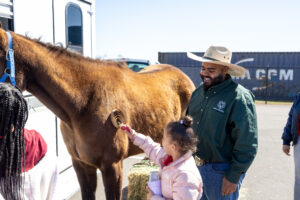
a child brushes a horse
Rashidi puts on demonstrations for his 4-H-ers where he teaches them about proper grooming and care for the horses.

A rodeo participant since childhood, Rashidi likes to incorporate his horses into lessons and activities for the Eastern Pasture Club. He puts on demonstrations where he teaches the kids about proper grooming and care for the horses, such as how to clean their hooves and what to feed them. He said it felt natural to include the horses in his club’s programming because of 4-H’s agricultural ties, and the kids love getting to see and pet the animals.

“Some kids, they’re not blessed with the opportunity to have interactions with horses,” Rashidi said. “So, I’m just trying to give these children more of this positive interaction just because they might not ever come in contact with a horse again. I’m trying to give them an experience so that they can have a positive outlook that one day they can possibly be a young cowboy or cowgirl.”

Roaring Adventures and Eastern Pasture are always welcoming new members to their clubs, and Williams encouraged any students or parents interested in 4-H to reach out for more information. In the future, LU Extension hopes to open more clubs around Oklahoma to continue to bring these opportunities to more children.

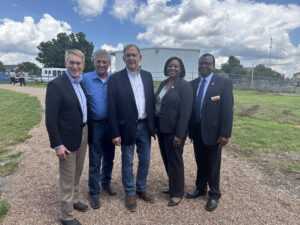
(From Left to Right) Sen. Lankford, State Rep. Talley, Sen. Boozman, President Jackson, and Dean Whittaker at the E. (Kika) de la Garza American Institute for Goat Research.

Senators Lankford, Boozman Visit Langston University to Discuss Agricultural Research, Extension

Release Provided By

LANGSTON, Okla.––Senators James Lankford (R-OK) and John Boozman (R-AR) visited Langston University to tour the school’s agricultural research facilities and discuss the work the university does to help small farmers in Oklahoma and around the world through agricultural extension and research.

The Senators met with representatives of the university’s administration during their visit to the Langston campus on Friday, including newly appointed president Dr. Ruth Ray Jackson and the dean of the Sherman Lewis School of Agricultural and Applied Sciences, Dr. Wesley Whitaker. Joining the tour was Oklahoma Representative John Talley (R-Stillwater).

During their visit, the Senators toured the Dairy Herd Information Lab for Goats and the Central Lab before visiting the E. Kika de la Garza American Institute for Goat Researchs Main Farm, where Sen. Lankford and Sen. Boozman were able to tour the Kid Barn.

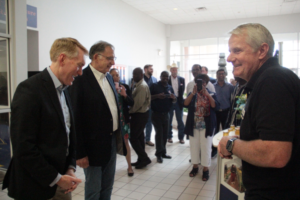
Senators Lankford and Boozman discuss Langston University's beekeeping program with honey beekeeper Hank Baker.
Senators Lankford and Boozman discuss Langston University’s beekeeping program with honey beekeeper Hank Baker.

“This was truly a high impact visit by two prominent American senators,” Dr. Whittaker said. The enthusiasm they expressed in seeing the quality and quantity of our work was truly palpable, and it will go a far way in helping to tell the success stories of Langston University and the 1890 land-grant community.”

Langston University is one of three land grant universities in Oklahoma, along with Oklahoma State University and the College of the Muscogee Nation. As an 1890 landgrant institution, one of the Langston University’s key missions is to conduct necessary research to support and promote agriculture accessibility, continued food security, and cooperative extension to provide resources and education to communities and farmers throughout Oklahoma and beyond. Many of Langston’s research programs aim to help small rural farmers make better use of their resources in innovative ways and solve problems facing the agriculture industry.

Prior to their visit to Langston University, Sen. Lankford and Sen. Boozman hosted the Senate Farm Bill Agriculture Stakeholder Roundtable in Oklahoma City, which was moderated by Secretary of Agriculture and Regent for the Oklahoma A&M System, Blayne Arthur. Sen. Boozman is the Ranking Member of the Senate Agriculture, Nutrition & Forestry Committee.

“We are honored to host Senator Lankford and Senator Boozman at Langston University’s Sherman Lewis School of Agriculture and Applied Sciences,” Dr. Jackson said. “Their support highlights the significance of our work in agricultural education and research in food security and small farming. We are proud to showcase the talents and innovations of our students and faculty.”

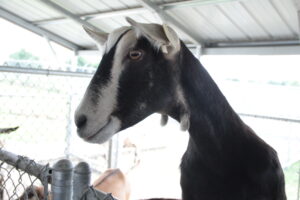
A goat at the E. (Kika) de la Garza American Institute of Goat Research.

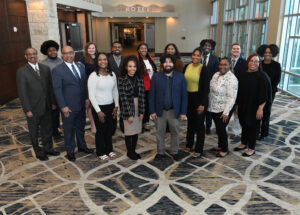
Langston University group photo at 2024 K-INBRE Symposium

Two Langston University students earn awards at annual K-INBRE Symposium

Release Provided By

by Ellie Melero, Media Relations Specialist

MANHATTAN, Kan. – Two Langston University students took home awards at the annual Kansas IDeA Network of Biomedical Research Excellence (K-INBRE) Symposium Jan. 12-14.

Senior crop and soil sciences major Kayla Smith earned a 2nd place Award of Excellence in Oral Presentations for her research on “Impairments in Cerebral Autoregulation and Cerebral Reactivity in Cancer Survivorship.” Junior biology major Daysha Isaac earned an Award of Excellence in Poster Presentations for her research on “Stalk Cell Movement in Drosophila: A model to understanding how migrating cells shape tissues and organs.”

“My experience was fun and also interesting,” Smith said. “It was my first time presenting oral presentations.”

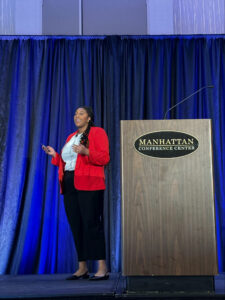
Kayla Smith presenting at the 2024 K-INBRE Symposium
Senior crop and soil sciences major Kayla Smith earned a 2nd place Award of Excellence in Oral Presentations at the 2024 K-INBRE Symposium. Photo provided by Kayla Smith.

K-INBRE is a collaborative effort of medical and academic institutions in Kansas and Oklahoma to “promote multidisciplinary research networks with a focus on Cell and Developmental Biology,” according to the K-INBRE website. Langston University is the only Oklahoma-based institution partnered with K-INBRE.

The program offers LU students mentored research opportunities as well as opportunities to present their research at events like the annual Symposium. For example, Smith, a second-year K-INBRE participant, worked with researchers at Kansas State University.

This is Isaac’s first year participating in K-INBRE. She was introduced to the program by one of her biology professors, Dr. Kj Abraham, who helped mentor her in presenting her research. She also received advice on the structure and presentation of her research from Dr. Lindsay Davis.

Isaac has enjoyed her time in K-INBRE so far, and she was excited to present her research at the Symposium. She studied the ovarioles present in female fruit flies’ ovaries and tracked mutations and their effects on the stalk cells.

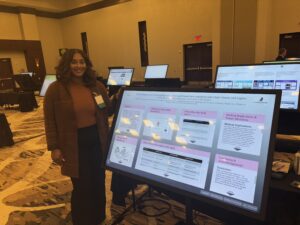
Daysha Isaac presents at the 2024 K-INBRE Symposium
Junior biology major Daysha Isaac earned an Award of Excellence in Poster Presentations at the 2024 K-INBRE Symposium. Photo provided by Daysha Isaac.

“This information allowed us to apply it to birth defects in infants,” Isaac said. “No way are we trying to cure it but gather more information about cell movement to make a connection. Such birth defects we compared it to were spina bifida and microcephaly.”

Smith is likewise passionate about the research she has helped conduct in K-INBRE, and she is confident her experiences in the program will aid her as she prepares to pursue medical school after graduation.

“I realize that my career goal is actually attainable,” Smith said, “and practice does make perfect.”

  • 1