

Paying it forward: Langston University alumnus dedicates career to helping Oklahoma farmers
(This story was originally published in ‘E Roar | Vol. 2 Issue 5 on Sept. 12, 2025)
by Ellie Melero
It takes a lot to be a successful agribusinessman.
From hard, physical labor to the complexities of proper natural resource management, there’s more to it than most people would think, and no one knows that better than Cleaon Bradford.
A native of Boley, Oklahoma, Bradford has been in the agribusiness industry his entire life. He has spent countless hours meeting with people, learning about best practices and available resources, and doing whatever was needed to build a thriving cattle farm in his hometown. Throughout it all, he has also spent his 21-year career with the United States Department of Agriculture (USDA) helping other Oklahoma farmers do the same.
“Just as I was able to receive it, I want those individuals to be able to have those opportunities as well,” Bradford said.
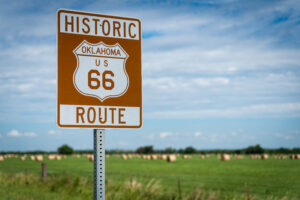
Photo credit: Michael Flippo/AdobeStock.
Like most Oklahomans, Bradford was exposed to Oklahoma’s thriving agriculture industry at a young age. He came from a family of farmers, and he was active in 4-H. He knew he wanted to own his own farm one day, so he took every opportunity he could to learn more about the industry.
His senior year of high school, as the president of his local 4-H club, Bradford attended the Retired Educators for Youth Agriculture Program at Oklahoma State University. Through his participation in the program, he was able to secure an internship with the USDA.
He spent the summer working for the local USDA office where he learned about natural resource conservation. He decided that was what he wanted to do with his life, so he began making plans for after high school.
Growing up in Boley, Bradford was familiar with Langston University and the opportunities it could provide, especially in the realm of agricultural research and education. So when he received a national scholarship from the Bureau of Reclamation, it was an easy decision to go to LU to study natural resource management.
“It was the college to go to,” Bradford said. “People spoke highly of it. It was a school where you were going to not only get your education, but you’d kind of feel like people cared about you and wanted you to succeed.”
Although he was getting ready to move for school, Bradford still hadn’t given up on his dream of owning his own farm. Actually, he was more motivated than ever. Not long after his high school graduation, 18-year-old Bradford secured a loan to lease land and purchase his first cattle stock, marking the beginning of his cattle production operation in Boley.
In addition to raising the livestock, he also grew and bailed hay with which to feed the animals in the winter. It was hard work, and he wouldn’t have been able to do it without the help and support of his family. He relied on that help even more when he began at Langston University in the fall of 2000.
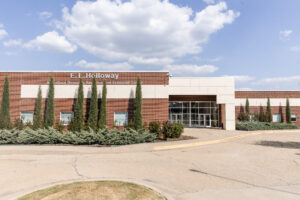
Bradford was dedicated to his farm, but he was even more dedicated to his studies. He wasted no time when he arrived on the Langston Campus, determined to get involved in the School of Agriculture and Applied Sciences (SAAS) every chance he had. For him, going to classes and attending events wasn’t just about getting a degree; it was about learning concepts and skills that he could turn around and apply on his farm.
“For me, it was just very encouraging that the things I was learning, I was able to use that on my own operation,” Bradford said. “That desire to learn and be successful in agriculture is one of the things that just really drove me.”
To anyone who met him, Bradford’s motivation to learn inside and outside the classroom was evident. Sherman Lewis, the LU alumnus and former USDA employee for whom SAAS is now named, worked at Langston University when Bradford was a student. He said Bradford’s potential was evident from the beginning.
According to Lewis, young Bradford had a strong work ethic and even stronger moral character. He knew Bradford would be successful in whatever career he chose, so he tried to encourage and support Bradford throughout their shared time at Dear Langston.
“He’s an outstanding young man,” Lewis said. “His work is always above and beyond any reproach, he’s always been a very hard worker, and he’s committed to doing what is necessary to make sure he gets the job done. And you know, he’s been that way from the day I met him.”
Bradford said the support he received from Lewis and the other faculty and staff in SAAS is part of why he thrived in college. From the beginning, SAAS felt like its own club where everyone wanted one another to succeed, and he had it drilled into his mind not to waste the opportunities LU provides.
He attended the semiannual career fair his freshman year where he spoke to recruiters from the USDA Natural Resource Conservation Service (NRCS) in Oklahoma. They told him about the USDA Student Career Experience Program, now called the Pathways Internship Program, which is a year-round paid internship for students that offers a guaranteed full-time job upon graduation to those who complete a minimum number of hours in the program.
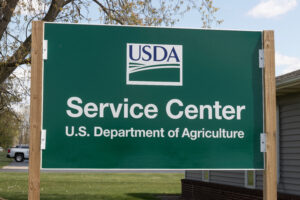
Photo Credit: jetcityimage/AdobeStock
He applied and, having already completed a USDA internship in high school, was readily accepted to the program. He was grateful for the experience and extra income the internship provided, but balancing his classes, his job and his farm was challenging.
“I was a very busy student,” Bradford said. “People used to say to me, ‘Man, you’re just real serious.’ And I’d say, ‘You know what? I am.’ I really took things serious, and I really wanted to take advantage of my time out there and really be successful.”
Bradford graduated in 2004 and accepted a job offer from NRCS as a Soil Conservationist in Wewoka, Oklahoma. He later became a district conservationist and served in roles as a supervisor and a team lead. Now, he’s the Outreach Coordinator for NRCS Oklahoma.
A large part of his job boils down to making sure Oklahoma’s producers are aware of the resources available to them through NRCS and helping them take advantage of what’s there when they need it. From guiding them to NRCS’ technical support to educating them about financial assistance programs, Bradford spends his days trying to help Oklahoma’s farmers.
As with many aspects of the agricultural industry, the work may not be glamourous, but Bradford said it’s rewarding. In every position he has held with NRCS, he has always enjoyed the outreach aspect of the job. He likes going out into the field and being with the farmers. He likes talking with them, working through their problems, and knowing at the end of the day he is helping people become successful agribusinessmen/women.
“I can look back at the times we put on an outreach event or had something going on, and you hear from the producers about how you helped them, helped their operation,” Bradford said. “That’s always rewarding.”
Agribusiness is one of the largest industries in Oklahoma. Nearly 75% of the state is farmland, and it produces $1.8 billion in agricultural exports per year while being one of the nation’s top producers of beef and rye, according to the Oklahoma Department of Commerce. Having spent his own career in the USDA, Lewis knows the systems that support this high level of agricultural industry are themselves held up by the people who work for them. People like Bradford.
Lewis worked at the NRCS’ national office in Washington, D.C., not long after Bradford graduated from LU, and he kept tabs on Bradford’s progress through the organization. He spoke with people from NRCS Oklahoma and other agencies who all knew Bradford and spoke highly of him.

According to Lewis, Bradford excelled not only at the technical aspects of his job, but also the relationship-building aspects. As he moved through the ranks, he did what he could to help newer employees succeed so they could help their constituents succeed. He even served as the president of the Oklahoma chapter of the National Organization of Professional Black NRCS Employees, an organization dedicated to mentoring young professionals in the workplace.
The combination of his skilled fieldwork and successful professional relationships have allowed him to have a broad impact on NRCS and Oklahoma agriculture.
“Any time you’re out there on the ground, working with individual farmers and assisting them, educating them and conserving a natural resource base, you’re doing something for the overall health and welfare of agriculture here in the state of Oklahoma,” Lewis said. “That’s what Cleaon has been doing. He’s touched the lives of many, many farmers.”
Throughout it all, Bradford has continued farming.
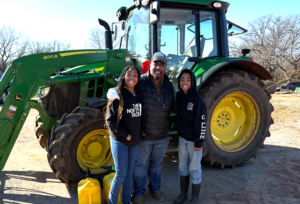
Every day, he goes to work with NRCS, then drives to Boley to tend to his herd before going home to his wife and kids. Over the years, he bought land as it became available, and with the help of his family––especially his father––he continues to grow his cattle and hay operation.
The farm is important to Bradford for many reasons. It’s a way for him to connect with his children and teach them practical skills. It’s a way for him to provide for their future. It’s tangible evidence of the hard work he’s done over two and half decades. And it’s a way for him to show others that it’s possible to be successful in an industry that can sometimes feel like too much.
“I want to continue to grow and master being in the ag business,” Bradford said. “I want to be a successful agribusinessman and be able to show that success, shine a light on the potential, the possibilities, the opportunities and make sure I’m educating others.
“Throughout my life, I want to make sure I spread that knowledge and encourage the future for people who want to get involved with agriculture.”