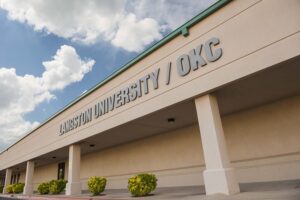
The Langston University Rehabilitation Counseling Program has been named one of the Top 10 rehabilitation counseling graduate programs and the Top HBCU program in the nation by U.S. News and World Report.
Langston University rose 8 points in the rankings from 2025 to be named the tenth best program in the United States. Previously tied with Winston-Salem University, LU now sits as the highest ranked Historically Black College or University (HBCU) on the list.
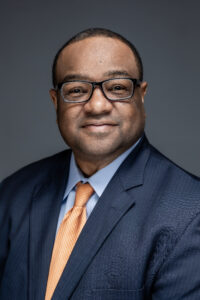
“We are incredibly proud to see our Rehabilitation Counseling program break into the Top 10 nationally,” said Dr. Corey Moore, the founding director of the program. “While the ranking is a high honor, the true reward is watching our graduates enter the workforce fully equipped to lead, and seeing our research translate into better outcomes for the communities we serve.”
Langston University was ranked above programs from the Illinois Institute of Technology, Northern Illinois University, University at Buffalo-SUNY and others.
This accomplishment comes as the program celebrates its 25th anniversary, and LU President Ruth Ray Jackson recently honored Dr. Moore with a Distinguished Service Award for his leadership as the founding chair of the Department of Rehabilitation and Disability Services.
Langston University’s rehabilitation counseling master’s program is available in Oklahoma City and Tulsa. Students benefit from small class settings that allow for more one-on-one interaction with the program’s distinguished faculty, and they have opportunities to participate in ground-breaking research at the department’s two federally funded Rehabilitation Research and Training Centers. Many of the students receive scholarships funded by the Office of Special Education and Rehabilitation Services/U.S. Department of Education, and all students participate in hands-on internships.
“We will use this momentum to further enhance the academic preparation of the next generation of rehabilitation and mental health professionals and to continue translating our high-impact solutions-oriented research initiatives funded by the National Institute on Disability, Independent Living, and Rehabilitation Research/Administration for Community Living,” Dr. Moore said.
For more information about the Rehabilitation Counseling Program, please visit langston.edu/rehab.
OKLAHOMA CITY–Langston University’s Department of Rehabilitation and Disability Studies earned $3.125 million in grants from the U.S. Department of Education to support the university’s rehabilitation programs, including funding 96 full-tuition scholarships over the next five years.
The department has been awarded three grants; one is from the Office of Special Education and Rehabilitation Services (OSERS), and two are from the Rehabilitation Services Administration (RSA).
The first grant, funded through the RSA and totaling $1 million over five years, will establish a specialized Pre-Employment Transition Services to Youth with Mental Disabilities track within the department’s master’s program for Rehabilitation Counseling. This will include funding the tuition, fees and a living stipend for 30 graduate students over five years.
The second grant, worth $1.25 million and funded by OSERS, will establish a new track within the undergraduate Rehabilitation Services bachelor’s degree program. The new track will be School-to-Work: Preparing Personnel to Serve School-Age Children with Intellectual and Developmental Disabilities, and the grant will fund the tuition, fees and a living stipend for 36 undergraduate students over the next five years.
The last grant is from the RSA and will pay out $875,000 over five years. This grant will establish another new track within the Rehabilitation Services program: Pre-Employment Transition Services to Youth with Intellectual and Developmental Disabilities (including Autism). It will fund 30 undergraduate scholarships over the next five years, which will include tuition, fees and a living stipend.
“Langston University is honored to receive this transformative investment from the U.S. Department of Education,” said President Ruth Ray Jackson. “These three grants reflect our unwavering commitment to preparing highly qualified professionals who will serve youth with mental, intellectual, and developmental disabilities.
“I commend Dr. Corey Moore and the Department of Rehabilitation and Disability Studies for their leadership in advancing inclusive education and workforce development. This funding strengthens our mission as a land-grant institution and expands access to high-impact academic programs that meet urgent national needs.”
Dr. Corey Moore is the Founding Chair of the Department of Rehabilitation and Disability Studies.
Undergraduate students interested in the Rehabilitation Services program who wish to apply for the scholarships within either track must have completed at least 41 hours of general education courses prior to applying. Interested individuals should contact Professor Emanual Lewis, the Rehabilitation Services Program Coordinator at LU-Tulsa, via phone at 918-902-3184 or via email at emanual.lewis@langston.edu.
Graduate students interested in the new track within the Rehabilitation Counseling program should contact Dr. Andre Washington, the Rehabilitation Counseling Program Coordinator at LU-OKC, via phone at 405-530-7525 or via email at andre.washington@langston.edu to apply for scholarships.
“The awarding of these grants, especially three at the same time, speaks to the relevance and value of the work being done here at Langston University in the Department of Rehabilitation and Disability Studies,” said Dr. Elizabeth Albright, Interim Dean of the School of Education and Behavioral Sciences. “These scholarships enhance what Langston University already does to support students through degree completion. By providing financial support, not only are students able to graduate without adding debt, but they will be stronger in their field because their primary focus can be school.”
These new grant projects present an exceptional approach to student development through LU’s partnership with the Oklahoma Department of Rehabilitation Services, Tulsa Public Schools and other local education agencies. Significant attention will be devoted to cross-fertilizing these academic initiatives and ongoing RRTC trainings to increase students’ knowledge of the delivery and transition of mental health and developmental disability support services to school-age children and youth.
The goal is to improve the supply of fully credentialed rehabilitation, mental health and disability professionals for employment in local educational and/or rehabilitation agencies.
“These innovative federally funded educational initiatives are critical for training and preparing our undergraduate and graduate students within the department to help meet the demands of human service systems addressing the current national youth mental health crisis as well as the pre-employment service support needs of school-age children and youth with intellectual and developmental disabilities” said Dr. Moore, the Founding Chair of the Department of Rehabilitation and Disability Studies and project director for all three grants.
The OSERS priority focuses on personnel preparation for special education, early intervention and related services personnel at Historically Black Colleges and Universities, Tribally controlled colleges and universities, and other minority-serving institutions. The RSA priorities are consistent with the purpose of the Rehabilitation Long-Term Training program, which is to provide financial assistance for academic training areas of personnel shortages in vocational rehabilitation.
These funded initiatives at Langston University are in direct response to identified needs in personnel development, as well as to improve services and outcomes for school-age children and youth with mental, intellectual and developmental disabilities.
It was a normal fall day in Oklahoma City, and Terrance Grayson felt restless. He called in sick to work that morning, but he wasn’t physically ill. He was just sick of his job.
Grayson had been working for the same financial lending company since graduating college, and he was good at his job. He had risen quickly to a managerial position and was making good money, but he hated the work. He wanted to do something different with his life. He wanted a career that felt fulfilling and where he could help others. He just wasn’t sure what that career was.
That day, because he hadn’t gone to work, he told himself he needed to find something productive to do. He decided to go for a walk, and while strolling down the street, he saw a sign for Langston University. He made an impulse decision to walk inside. At the front desk, Grayson asked what graduate programs they had available, and that’s when he learned about LU’s brand new master’s degree in Rehabilitation Counseling.
“I just walked up to Langston (University) and asked them if they had any programs,” Grayson said. “I literally walked in off the street and met with Dr. Moore, and I talked with him about it and filled out an application and just started down that path.”
Dr. Corey Moore is the Founding Chair of the Department of Rehabilitation and Disability Studies.
That was in 2000. Grayson was part of the inaugural class for the Rehabilitation Counseling master’s program. Now, he has been working for Rose State College in Midwest City, Oklahoma, for almost two decades, and he loves his job.
The Rehabilitation Counseling master’s program came together as the result of a partnership between LU and the Oklahoma Department of Rehabilitation Services. The two institutions collaborated on a grant proposal for the U.S. Department of Education’s Rehabilitation Services Administration and were awarded $500,000 to hire faculty, fund student scholarships and fund student conference travel.
Dr. Corey Moore was hired in October 2000 to create the program, and he became the Founding Director. Dr. Moore came from the University of Arkansas–Fayetteville’ Rehabilitation Research and Training Center on Persons who are Deaf and Hard-of-Hearing, where he served as a research assistant professor. His experience and expertise have shaped the LU program for the past 25 years.
“I saw the mission of the graduate program in rehabilitation counseling as to train rehabilitation and mental health professionals to meet the needs of people with disabilities,” Dr. Moore said. “Teaching, research and service.”
For months, Dr. Moore worked to recruit faculty and students while putting together a curriculum worthy of accreditation. In Spring 2001, the program officially launched at the LU-Oklahoma City Campus with its first cohort of 18 students.
Alongside Grayson, Sharon Caldwell was a member of that inaugural class.
Caldwell was a graduating senior in LU’s Health, Physical Education and Recreation program when she first heard about vocational rehabilitation counseling. She had originally come to LU with the goal of becoming a physical therapist, but as she approached graduation, she was no longer sure that’s what she wanted. At her professor’s recommendation, she decided to attend an informational session about the new Rehabilitation Counseling program.
“Initially, when I went to Langston, I felt like my passion was physical therapy because I knew I wanted to help people in some type of way,” Caldwell said. “When I heard about the rehab counseling program, those individuals work with individuals with disabilities to help them… to make them become more independent. The fact that the vocational rehab counselor was helping individuals achieve something, I think that kind of sparked my attention.”
Sharon Caldwell was a member of the first cohort for the Rehabilitation Counseling master’s program.
Grayson and Caldwell were excited about the program and the opportunities it offered them. With his scholarship, Grayson was able to quit the job he hated and focus on school full time. As she progressed through her classes, Caldwell discovered a clearer path to her future.
Their cohort became close friends during school. They joked they were “the guinea pig class” because the program was still trying to determine the best ways to do things, but the students knew they were still getting a quality education. They liked working with one another, they liked their professors and, even while working for hours on research papers, they were having fun learning.
“I’d say, educationally, it was the best experience I’ve ever had,” Grayson said. “They opened all these doors to me and provided me with all the support, and without that, I’m not sure I would’ve been able to do it… The environment was just so nurturing that it was everything I needed at the time.”
All 18 members of the first cohort graduated from the program on time and found work in the counseling industry. Grayson worked for the Oklahoma Department of Rehabilitation Services for almost three years before he began working at Rose State. He has held various positions there, and he is now the Director of Academic Outreach.
Caldwell completed an internship/practicum with one of her professors at PROS and Associates during school, and she accepted a full-time position there after graduation. She worked as a rehabilitation counselor for three institutions before accepting a position as a counselor with the U.S. Department of Veterans Affairs in 2012. Since then, she has worked in the Veterans Readiness & Employment Program in Oklahoma City, and she is now the Employment Coordinator.
The first few cohorts that went through the Rehabilitation Counseling program were so successful, the university decided to expand the program in 2004 and offer the master’s degree at the LU-Tulsa campus, too. In 2008, LU-Tulsa added a bachelor’s in Rehabilitation Services, and the School of Education and Behavioral Sciences officially created the Department of Rehabilitation and Disability Studies with Dr. Moore as the Founding Chair.
The Rehabilitation Counseling program earned its accreditation through the Council for Accreditation of Counselors and Related Educational Programs. In 2013 the Department of Rehabilitation and Disability Studies established LU’s first Rehabilitation and Research Training Center (RRTC) that conducts research on capacity building for minorities. A second RRTC has since been established that conducts research on advancing employment opportunities for people with disabilities with the greatest support needs.
The RRTCs are nationally recognized and funded by the National Institute on Disability, Independent Living and Rehabilitation Research. Through the RRTC, the Department of Rehabilitation and Disability Studies established a post-doctoral program for recent doctoral graduates to train in advanced research methodology and statistics. The RRTC has hosted seven doctoral fellows over the past eight years, all of whom have gone on to work at other universities, federal agencies or community-based rehabilitation service programs.
All of this grew from the master’s degree.
While they celebrate this milestone anniversary for the Rehabilitation Studies graduate program, Dr. Moore and the faculty in the Department of Rehabilitation and Disabilities Studies continue to look for ways to improve and grow the program. They are focused on workforce needs. They try to listen to their community and be responsive to the demands of employers. They have created an informed and research-based curriculum that prepares graduates for the demands of a career as a vocational rehabilitation counselor.
“It’s been 25 years of joy and of just a remarkable journey,” Dr. Moore said. “I’m excited about that, happy about that, thankful for it. We look forward to continuing to push the program forward in the future, and I think great things are beyond the horizon.”
Every year on Mother’s Day, Dr. Emily Patterson Harris gets a call from one of her former students.
When that student was younger, he attended and dropped out of two colleges. Dr. Harris wouldn’t have it.
“It took me two years to talk him into coming to Langston University and giving it another try,” Dr. Harris said. “And he did. We had some rough times in there, but he finished, and he calls me on Mother’s Day.”
Not all of her student stories are as friendly.
Once, while walking down the stairs at the LU-Tulsa Campus, a student stopped Dr. Harris to talk. He was a student who sometimes struggled to balance his schoolwork with his responsibilities as a father, but Dr. Harris knew he was capable of it and always made sure to let him know it.
“He stopped me, and he said, ‘Well, I want you to know that I’m going to graduate, if for no other reason than to get you off of my back!’” Dr. Harris said. She smiled and responded with an upbeat, “OK!”
That student did graduate, and he went on to earn his master’s degree. She still sees him occasionally and always makes the time to talk with him.
Dr. Harris has countless stories like these because she’s been working with students for over 40 years. She has worked tirelessly to develop well-defined and relevant programs that will help students get jobs after graduation, and she has dedicated countless hours to making sure students make it to graduation. From working with them in the classroom to advising those who left to figure out how to come back, Dr. Harris doesn’t give up on her students. She cares about them, and she knows that for many, earning their degree will change their life.
Education is Transformative
Dr. Harris has always believed in the power of education, and she understands better than most that the transformative effects of earning a degree can be felt for generations. Her own family is a prime example. Her maternal grandmother, Emily Alford, only had an 8th grade education, but she was determined to send her children to college. They came to Langston University.
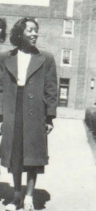
Violet Alford, Dr. Harris’ mother, graduated from Langston University with a B.S. in Business in 1950.
Dr. Harris’ mother, Violet, graduated from Langston University in 1950 with a B.S. in Business. Her father, Lee V. Patterson, Sr., graduated from LU that same year with a B.S. in Industrial Arts. They both had successful teaching careers in Oklahoma, and they made sure their children understood education was important. The message was echoed by Dr. Harris’ aunts and uncles throughout her childhood, and she and her cousins eventually passed the message along to their children, too.
Today, the younger generations of the family understand education is transformative. Dr. Harris’ son Erick said they all expect to go on to earn the highest-level degrees available for their chosen professions. Four generations after Emily Alford, the average degree in the family is a masters.
“I go back to that initial decision that my grandmother made that a college education was important,” Dr. Harris said. “That one decision has impacted generations of my family.”
It also allowed Dr. Harris to impact thousands of others.
Dr. Harris graduated from her father’s alma mater, Booker T. Washington High School in Tulsa, Oklahoma, but she did not follow in her parents’ footsteps to attend Langston University. Instead, she chose to attend Central State University in Wilberforce, Ohio, and her experiences there reinforced her beliefs about the power of HBCUs. She went on to earn her Master of Library and Information Studies from the State University of New York at Buffalo before moving to Texas to serve as a librarian at Houston Community College.
After a three-year stint in Houston, Dr. Harris came home to Oklahoma. Thanks to the efforts of Dr. Roosevelt Mack, she officially joined the Lion Pride as a librarian at the LU-Tulsa Campus in 1981.
Building Something
Langston University’s Tulsa campus opened in 1979. It was the first public institution to offer graduate and upper level higher education courses in Tulsa.
The Langston University-Tulsa Campus had been established just two years prior when Dr. Harris joined the staff.
It was the first public institution to offer upper-level higher education classes in Tulsa, and in 1982, it worked together with Oklahoma State University (OSU), the University of Oklahoma (OU) and Northeastern State University (NSU) to form the University Center at Tulsa. Still a firm believer in the importance of education, Dr. Harris was excited to be a part of bringing access to higher education to her hometown.
Serving as a librarian for all academic programs gave Dr. Harris an opportunity to work closely with the students in Tulsa, and she found she enjoyed getting to know them while helping them access the materials they needed for their classes. She was good at her job, and she was soon asked to move to the Langston Campus to serve as the Acting Director of the G. Lamar Harrison Library while the school looked for a permanent director.
When she returned to LU-Tulsa a year later, she knew she was ready to take on more responsibility.
She transitioned from the library to a position as an academic counselor. It was around this time that Dr. Wessylyne A. Simpson, Dr. Harris’ aunt who was then the Dean of the School of Education and Behavioral Sciences (SOEBS), was working to expand the program offerings at the Tulsa Campus. Dr. Harris worked with Dr. Simpson, SOEBS faculty and Diana Sharp to bring the Teacher Education program to Tulsa.
“We worked on paperwork and made sure we had all the bylaws and everything set up before we could start recruiting students,” said Sharp, who still works at LU-Tulsa as an administrative assistant. “We all put our heads together and started the program here, and it’s taken off ever since.”
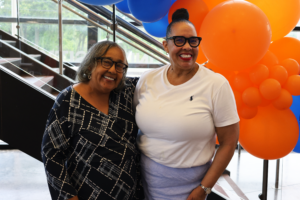
Diana Sharp (right) has worked with Dr. Harris since she joined the LU-Tulsa staff in 1983.
Sharp liked working with Dr. Harris right from the start. When they first met in 1983, Sharp’s first impression was that Dr. Harris was a peppy, happy-go-lucky person with whom it was very easy to talk. Forty years later, Sharp said that’s still how she’d describe her.
LU Tulsa’s Teach Education program was the first of many projects Sharp and Dr. Harris would work on together over the years, and Sharp said she always appreciated Dr. Harris’ positive attitude and willingness to try several approaches until they found the one that would work. She also appreciated that Dr. Harris knew how to leave work at work, allowing them to form a personal friendship in addition to their professional one.
Thanks to their hard work, they brought the Teacher Education program to LU-Tulsa in 1985. The program was housed on the seventh floor of the building they shared with OSU at 440 S. Houston St., and Dr. Harris took on the role of Associate Director for Teacher Education at LU-Tulsa.
For 12 years, she supervised the teacher education program at the Tulsa Campus. She loved working with students and continued to serve as an advisor. In 1986, she also began teaching as an assistant professor in SOEBS, focusing mostly on psychology and education courses.
She went back to school and earned her Ed.D. in Higher Education Administration from OSU in 1989, and she said she is eternally grateful to the late Dr. Mack for his continual support throughout this time as she juggled her work and doctoral coursework. She also wanted to thank Dr. Ernest L. Holloway, LU’s longest-serving president, and Dr. C. Gary Crooms.
“There’ve been powerful leaders, master teachers and mentors that encouraged me and were great at their chosen fields,” Dr. Harris said. “The late Dr. Holloway continually focused on challenges as opportunities. Dr. Crooms taught me to look at those challenges from multiple perspectives.”
Dr. Harris finished her doctorate, completed additional coursework in Behavioral Sciences, and became certified to teach Social Studies, Language Arts and Library Media. She took her mentors’ lessons as well as everything she’d learned from her own classroom experiences as both a teacher and student to try to continually improve her own classes.
“What I loved about teaching is just the fact that there’s always more information,” Dr. Harris said. “And I’m a librarian, so I love looking for information. You can never get tired of finding new things or new ways of doing things, and sometimes your students will send you off in a different direction.”
Students First
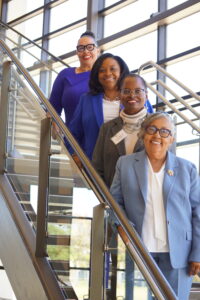
Dr. Harris (far right) served as the Associate Vice President for the LU-Tulsa Campus for almost 12 years.
Dr. Harris was dedicated to her work, and that’s something to which her family can attest. Growing up, her two sons spent much of their free time at the LU-Tulsa Campus and witnessed how hard their mother worked for the students there.
One day, an 8-year-old Erick approached Dr. Virginia Schoats, the campus site director, and told her as much.
“My mom was always working hard,” Erick said. “I had just found out what the word ‘promotion’ meant, and once I realized that I said, ‘Oh, well she deserves one of those.’ And because (Dr. Schoats) was her boss I thought, ‘She’s the one that can give it to her.’”
Not long after, Dr. Schoats did recommend Dr. Harris for a promotion.
In 1997, she became the Associate Vice President for LU-Tulsa, the person who ran the campus. She also served as the Institutional Representative for Langston University to the University Center at Tulsa, advocating for the needs of LU students and faculty while working to improve access to higher education for all Tulsans.
Though her duties and responsibilities changed, her goal stayed the same: to guide students to degree completion.
At this time, the average age of the students at LU-Tulsa was about 34. Dr. Harris recognized early on that their needs would be different than the needs of students at the Langston Campus, so she tried to keep their work and familial responsibilities in mind. Under her leadership, the faculty and staff in Tulsa worked to make it as feasible as possible for non-traditional students to take classes. They offered everything from a bookstore to a registrar’s office on campus so students wouldn’t have to make the drive to the Langston Campus.
“We had it set up making sure that once they got out from work, we had every avenue for (students) to be able to take courses so that they would still be able to graduate,” Sharp said. “We made sure the students were happy and taken care of, no matter how many different hats we had to wear.”
Dr. Harris’ motto was to meet students where they were and never take anything personally, and she gave that advice to her student teachers as well as her faculty.
She understood that students, the same as everyone, had challenges in their lives outside of class and were sometimes prone to take that out on their teachers. But she also knew she had to look past that in order to assist them, which she was determined to do.
“We’re all works in progress,” Dr. Harris said. “I emphasize that we each have our own individual paths.”
Dr. Harris has always done everything in her power to help students make it to graduation.
Students drop out of college for all sorts of reasons. Sometimes they don’t feel they have time to go to class. Sometimes they can’t afford it. Sometimes they just don’t want to do it anymore. If a student dropped out of LU-Tulsa, Dr. Harris wanted to know why.
She would contact them to follow up on why they chose to leave school. Then she would brainstorm solutions to help them come back.
“She would make those calls, and once she got them here, she would do all the rest of it,” Sharp said. “She was making sure that students were taken care of and just trying to get them to realize that, you know, ‘You’re so close. Don’t lose this.’”
Many students returned to school thanks to Dr. Harris’ efforts, and many other students stayed in school for the same reasons.
Dr. Harris recalled that once, an alumnus whom she hadn’t seen in years walked up to her and abruptly told her that he used to hate her. Unflappable as always, she simply responded, “Oh, you did?” He said he really did.
He told her he used to complain about all the work she made them do in her classes. He didn’t appreciate all the readings, essays and other homework she assigned. It made him resent her during his time as a student.
“And then he said, ‘I just wanted to tell you that I earned my masters,’” Dr. Harris said. “And he told me the program he’d gone through, and he said, ‘If it hadn’t been for you, I would not have made it through that program. And I just wanted to come back and share that with you.’
“That’s the beauty, I think, about Langston University, no matter the campus. There is just a history of balancing those two things of nurturing a student but also having great expectations for those students. ‘LU graduates around the globe serve as leaders, innovators and engaged citizens,’ to quote our vision statement.”
A Lasting Legacy
Dr. Ruth Ray Jackson said Dr. Harris embodies the Alpha Kappa Alpha Sorority, Inc., motto: Service to All Mankind.
In 2008, Dr. Harris became the “Gear Up” Program Director and Coordinator for the Department of Psychology at LU-Tulsa. She worked closely with Tulsa Public Schools to design and deliver programs meant to encourage college attendance and completion at Tulsa-area middle and high schools while continuing her work as a professor and the leader of the psychology program in Tulsa.
In 2018, she was appointed Chair of the Department of Psychology for all LU campuses, and in 2019, she became Dean of the School of Education and Behavioral Sciences. She has also served, when the need arose, as Acting Dean of University Libraries. Throughout it all, she has continued her efforts to help students learn and make it to graduation.
“Dr. Harris has done a phenomenal job,” President Ruth Ray Jackson said. “Even in her role as Dean, she continues to advise students and to meet with transfer students. Of course, she’s now in a position where she’s solving problems and listening to complaints and concerns from both students and faculty, but she’s consistently energized and ready to meet somebody and help them get to where they want to go.”
Dr. Harris has become known for the positive energy she brings to projects and her willingness to try several routes until she finds the one that will work. Dr. Jackson called her a creative problem solver, and she’s had a lot of experience doing it.
During her 44 years at Langston University, Dr. Harris has tackled lots of challenges, from redesigning curricula to helping develop completely new ones. Although she had almost 40 years of teaching experience, she continued trying out different teaching strategies right up until she taught her last class in 2024. She did it because she knew there was always room for improvement.
Dr. Harris knows Langston University inside and out, and she has made a lasting impact.
“My mother is one of the most encouraging people that I’ve ever known,” Erick said. “She supports you, but there’s a nice edge to her that will push you and encourage you to keep moving forward. And that’s what she’s done at Langston University.”
Throughout her career, Dr. Harris has been the model of a servant-leader, both in her personal and professional life.
Her younger son, Christopher, said he’s grateful to have grown up with Dr. Harris as a role model because she inspires him to try to be a leader in his own industry, noting that he often models his own behavior after her in professional settings. He also recognized that his mother’s career at LU has always gone beyond her job descriptions.
“You recognize the sacrifice almost after the fact,” Christopher said. “She could have had positions and titles that would’ve paid more at other institutions and in other states, but not everything is about financial gain. It’s having us grow up around our grandparents, and from a career perspective, it’s saying that you can have a positive impact on people’s lives and be that role model of what leadership looks like.”
She is a longtime member of Alpha Kappa Alpha Sorority, Inc., and Dr. Jackson, a fellow AKA, said Dr. Harris perfectly embodies their sorority’s motto: Service to All Mankind.
Dr. Harris said it’s not hard to find ways to serve because they will usually find you. Now, after four decades of service to Dear Langston, she is finally ready to retire. Her last day will be June 30, though she jokes it will really be “the 12th of never.”
“I’m sure I will (miss teaching),” Dr. Harris said. “But I’m sure that I can find all kinds of creative things to do.
“I say, ‘Don’t look back. You’re not going in that direction.’”
Dr. Harris will retire from Langston University after 44 years of service on June 30.
It’s always a special moment to watch a loved one walk across the stage at graduation, but for the Barnett family, this year’s Langston University commencement ceremony was doubly special.
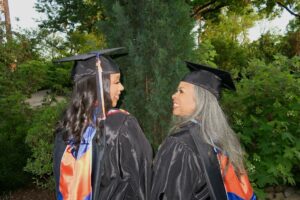
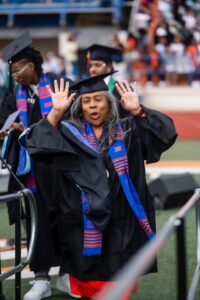
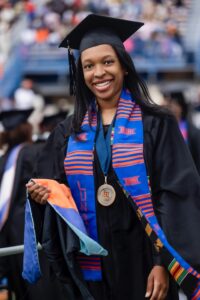
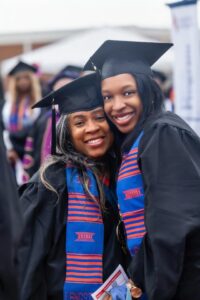
Mother-Daughter duo Cerita and Alexis Barnett both graduated with their master’s degrees in rehabilitation counseling this May, and their family and friends cheered loudly from near and afar as the two walked across the stage together as proud members of the Class of 2024.
“We laughed a lot, we studied a lot,” Alexis said. “We learned how to work as a team to grow.”
Alexis and Cerita didn’t always plan to go to school together.
A 1992 graduate of Langston University, Cerita wanted to work in a public school system, particularly with at risk students, to help provide guidance to young people as they navigate their next steps in life. After earning her bachelor’s in sociology, she intended to earn a master’s degree in pursuit of this goal. But life had other plans for her.
Certia Barnett graduated from Langston University in 1992 with her bachelor’s in sociology. Thirty-two years later, she graduated from LU again with her master’s in rehabilitation counseling.
Cerita got married, found a job and had kids. Her family became her priority, but she never gave up the idea of pursuing her master’s.
“I decided, okay, I’ll wait ‘til [the kids] get a little older so that it would be easier for me to actually do a program and do the homework, read the chapters, everything that was required of me,” Cerita said. “So, I was content working as a substitute teacher so that I can help still teach and guide my own children.”
As a substitute teacher in the Tulsa Public School system, Cerita had the opportunity to work with kids like she wanted, and she also had the flexibility to take an active role in her own children’s lives. That included taking an active role in their education.
In the classroom, she always tried to impress upon students the importance of taking their education seriously, and she did the same at home. She would volunteer in her kids’ classrooms, volunteer with their extracurriculars, help them with homework and do whatever she needed to help them succeed in school. And succeed they have.
Alexis graduated from the University of Oklahoma with a double major in psychology and sociology in 2021. Like her mother, Alexis knew she wanted to pursue a master’s degree.
After graduating with her bachelor’s from the University of Oklahoma, Alexis Barnett encouraged her mother to pursue their master’s degrees together.
“I know that education can open doors,” Alexis said. “So, I had my mind set on [a master’s degree]. I knew that’s something I wanted to challenge myself to do, and I’m glad I did.”
After Alexis graduated from OU, Cerita began to think it might finally be time to return to school herself. Her family, including Alexis, encouraged her. Alexis and Cerita were both interested in counseling, so they began looking to see what programs were available in the Tulsa area.
Cerita, confident in the quality educational experience she would receive at Langston University thanks to her experience as an undergraduate student, began looking into the rehabilitation counseling program at LU-Tulsa. Alexis followed suit and decided to apply, but Cerita was still hesitant about whether she was ready to return to school yet.
“I was able to encourage her to go ahead and apply after I had applied,” Alexis said. “We were able to apply around the same time, and we both got accepted to the Spring ‘22 cohort.”
Cerita smiled and nodded as she remembered how excited their family was when the two announced their decision to go to school together.
“My family was excited for me because they knew at some point, I wanted to go back to school,” Cerita said. “And they thought it was neat, ‘Mama and Alexis is going to school together!’ And actually, at one point, I was not going to tell anybody just in case I changed my mind. But my husband, Harvel…”
“He started telling people,” Alexis laughed. “He was excited.”
With the support of their family–Harvel, Alexandria, Albany and Arnetta–and friends behind them, Cerita and Alexis began their graduate school journey together.
Cerita (left) and Alexis helped and supported each other throughout the two-year rehabilitation counseling program and graduated together in May.
Thanks to the way the two-year rehabilitation counseling program is structured, Cerita and Alexis took all their classes together. While some of their classes reinforced things they had learned in their undergraduate courses, others introduced new concepts and encouraged them to look at things from new perspectives. With a built-in study-buddy, the Mother-Daughter duo tackled all their coursework head on.
After 30 years on the other side of the classroom, Cerita had to adjust to being a student again. Thankfully, Alexis was there to help.
Alexis introduced her mother to some new studying techniques, helped her relearn APA Style–which had experienced a few updates since Cerita had last used it–and helped her navigate the technology they needed to use. In return, Cerita helped Alexis talk through and simplify concepts, helped her manage her time efficiently and always provided encouragement when she needed it.
“Our relationship as students helped to reinforce what we were learning in the class,” Alexis said. “We were able to provide one another with output. And when you put two brains together, then you have a strengthened perspective.”
“It’s like old school with new school,” Cerita agreed.
They helped and supported each other through the whole program, taking turns being each other’s shoulder to lean on when needed. After two years of hard work, they graduated this spring.
With her new degree, Cerita still plans to assist people in the counseling area. Alexis would like to give back and help people. Cerita and Alexis both expressed gratitude to God for this joyous, momentous opportunity.
“We are especially grateful that our mother/grandmother Marilyn is alive and celebrating our accomplishment with us,” Alexis said.
“It felt so special to be hooded,” Cerita said. “Our experience will remain in our hearts. I knew it was going to be a challenge to get back into the regimen of studying while wearing different hats. This was one of the most challenging things I’ve ever done in my life, but God helped me through.
“What was rewarding for me was, this is something I’ve been wanting to do for a long time. And now it’s happening, I’m walking in it. It’s a reality. And whatever challenges came, we were able to work with it. Better together.”
OKLAHOMA CITY––Langston University, Oklahoma’s only historically Black college or university, has been awarded a $1.25 million grant from the U.S. Department of Education’s Office of Special Education and Rehabilitation Servies (OSERS) to establish a new specialized course of study to prepare personnel to serve school-age children with mental disabilities.
The grant, which will total $1.25 million over five years, will be used to establish the “School-to-Work: Preparing Personnel to Serve School-Age Children with Mental Disabilities (STW-SACMD)” track within the university’s existing CACREP accredited Master’s of Science Degree in Rehabilitation Counseling Program. Dr. Corey L. Moore, a professor in and the founding chair of the Department of Rehabilitation and Disability Studies, will serve as Project Director for this grant.
Moore is also the Principal Investigator at the National Institute on Disability, Independent Living, and Rehabilitation Research (NIDILRR)-funded Rehabilitation Research and Training Center on Research and Capacity Building for Minority Entities (LU-RRTC) and Rehabilitation Research and Training Center on Advancing Employment Equity for Multiply Marginalized People with Disabilities (LU-2ERRTC).
“This initiative is important to the field of disability and employment as it affords our program the opportunity to train and prepare our students for rehabilitation positions that serve school-age children with mental disabilities from minority backgrounds to achieve a smoother transition from the secondary grade school system to the world of work,” Moore said.
The STW-SACMD project presents an exceptional approach to student development through LU’s partnership with the Oklahoma Department of Rehabilitation Services, Tulsa Public Schools and other local education agencies in Oklahoma.
Significant attention will be devoted to cross-fertilizing STW-SACMD and on-going LU-RRTC and LU-2ERRTC trainings, including with webinars and community of practices, to increase students’ knowledge about the delivery of transition and mental health services to school-age children with mental disabilities from minority backgrounds. The goal is to increase the supply of fully credentialed rehabilitation and mental health professionals from diverse racial and ethnic backgrounds available for employment in local educational and/or rehabilitation agencies.
The grant will pay for tuition and fees and will provide a living stipend for 36 students in the Rehabilitation Counseling Program, which was ranked #19 and highest across all HBCUs by the U.S. News & World Report in the publication’s 2023 rankings of Rehabilitation Counseling Programs in America.
“I am immensely proud of the continued success of Dr. Moore and scholars within Langston University’s Department of Rehabilitation and Disability Studies,” said Dr. Ruth Ray Jackson, President of Langston University. “This $1.25 million grant from the U.S. Department of Education is further evidence of the impact of their work in preparing our students for success and addressing needs across underserved communities.
“This significant investment supports our institutional priorities of offering quality academic programs, engaging in purposeful partnerships, and ensuring access to education for all.”
This OSERS priority (ALN 84.325M) focuses on personnel preparation of special education, early intervention, and related services personnel at HBCUs, Tribally controlled colleges and universities, and other minority-serving Institutions under focus area (B)- preparing personnel to serve school-age children with disabilities.
The funded STW-SACMD initiative at LU is in direct response to identified needs related to personnel development issues and demands and the improvement of services and results for school-age children with mental disabilities, especially those from racially and ethnically diverse backgrounds, including those who are multilingual.
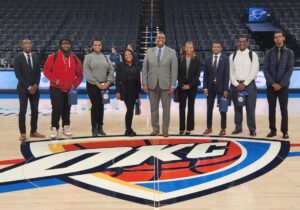
LANGSTON, Okla. — In an exhilarating blend of education and sportsmanship, over 30 Langston University students had the exclusive opportunity to step into the fast-paced world of professional sports with a career-focused visit to the headquarters of the Oklahoma City Thunder, the freshly crowned No. 1 seed in the NBA’s Western Conference.
As the Thunder gears up for a promising playoff season, students from the School of Business, the Department of Communications, and the Department of Health, Physical Education and Recreation attended the “Careers in Sports Event with OKC Thunder.” This initiative is part of an ongoing effort to strengthen ties with leading organizations and open new horizons for students.
Professor Ralph Grayson, Chair of the Computer Science and Management Information Systems Departments, spearheaded the event and emphasized the importance of integrating practical experiences with academic learning.
“Our students are not just studying the theory; they are out here, experiencing real-world applications of what we teach,” Professor Grayson said.
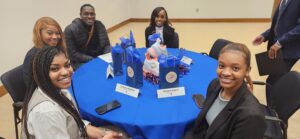
Langston University students get a rare opportunity to network with professionals in The Thunder organization.
During the visit, students participated in roundtable discussions, engaged in panel sessions, and enjoyed a comprehensive tour of the Thunder’s arena. They interacted with team executives who discussed various roles within the sports industry, from analytics and event management to health and player development.
Professor Carolyn Ross from the Department of Communications highlighted the transformative nature of the experience.
“Learning about media relations or sports marketing in a classroom is one thing,” Professor Ross said. “It’s another to see those roles in action during the high stakes of NBA playoffs.”
The event provided valuable professional insights and showcased the potential career paths available within the sports industry. Both professors intend to foster this budding relationship, ensuring continued student engagement and learning opportunities.
LANGSTON, Okla. – Students running around, laughing and having fun while their university’s president teaches them how to play pickleball is probably not what you’d expect to see on a college campus gearing up for midterms, but that’s what awaited any who made their way to the university tennis courts on Friday afternoon.
Langston University’s Association for Health, Physical Education, Recreation and Dance (LUAHPERD) and the ROARS Peer Educators held a “Cruising Into Midterms” event on Friday, which featured bike riding, pickup basketball and Pickleball with the President. The event was open to all students, and many took a break from studying to come hang out with their friends and decompress as they prepared for midterms.
“One of the priorities of the year is programming,” said Interim President Ruth Ray Jackson. “So, I’m very excited to see the HPER clubs adding programming to support good health and destressing for our students as they prepare for midterm exams.”
President Jackson encouraged everyone who came to pick up a paddle and hit the court, and many students were more than happy to learn a new sport from their president. Others preferred to ride bikes with their friends, and some just wanted to relax in the fresh air. Everyone who came was happy for a chance to get out of their rooms and stretch their legs before the grind of midterms fully began.
Kyara Swanson, a senior physical education major, said she thought the event was a fun way to relax, clear her mind and shake off some nerves as she prepared for her upcoming exams.
“Just simply riding the bikes or doing anything physical, it helps with your mental health,” Swanson said. “It helps you just clear your mind sometimes. You know, you’re in college and sometimes you just need a break.”
Giving students a break was the entire idea behind Cruising Into Midterms.
Dr. Desmond Delk, the chair of the Department of Health, Physical Education and Recreation and one of the faculty advisors for LUAHPERD, said the goal of the event was to remind people to take care of their mental and physical health because doing so will help them succeed in their classes.
“We’re prioritizing mental health, we’re prioritizing physical activity, and we’re encouraging collaboration between our faculty, staff and students,” Dr. Delk said. “I really commend the students on organizing everything, promoting the activity and really just coming out and enjoying themselves.”
The event lasted two hours, and President Jackson was there the whole time, playing pickleball and getting to know the students. Laughs could be heard on and off the court, and many students were happy for an opportunity to spend time with their president and their peers.
“I have had a blast sharing my love of pickleball with our Langston University students,” President Jackson said. “I’m excited that there’s great interest, and perhaps in the future we can add this as part of our recreational programming.”
LANGSTON, Okla. –The Langston University School of Education and Behavioral Sciences announced that United States Magistrate Judge Bernard M. Jones will keynote the 2016 Ira D. Hall and Rubye Hibler Hall Endowed Lecture Series at 11:00 a.m. on Tuesday, March 8, 2016. Named in honor of Langston University alumni Ira D. Hall and Rubye Hibler Hall, the annual lecture series exists to commemorate the Halls and their commitment to education.
The Honorable Bernard M. Jones was appointed United States Magistrate Judge for the Western District of Oklahoma on July 31, 2015, becoming the first African American in the state of Oklahoma to serve in this capacity. Prior to his appointment to the federal bench, Judge Jones served as a District Judge for Oklahoma’s Seventh Judicial District. He received a Bachelor of Arts in Political Science from Southern Methodist University, and obtained his Juris Doctor from the University of Notre Dame Law School. Born and reared in northeast Oklahoma City, Judge Jones is active in the community and currently serves as a Director for the Boy Scouts of America’s Last Frontier Council and as a Trustee of the Ralph Ellison Foundation. The Journal Record, Oklahoma Magazine, and OKC Biz have recognized him as one of Oklahoma’s Achievers Under 40, among other noteworthy achievements.
Initially established by Rubye Hibler Hall in 1989 to honor her husband Ira D. Hall, the series was renamed to honor the contributions of both upon Mrs. Hall’s passing in 2003. Ira D. Hall was principal of several schools, superintendent of Clearview School and assistant director of all black high schools for the Oklahoma Education Department. Rubye Hibler Hall was the first African American appointed to the Oklahoma State Regents for Higher Education. She was with the Oklahoma City School District 43 years, beginning in 1932 as a teacher, speech pathologist, psychometrist, diagnostician and consultant.
Langston University is located 12 miles east of Guthrie, Oklahoma. Founded in 1897, Langston University boasts three campuses located in Langston, Oklahoma City and Tulsa. The University offers more than 38 degree programs, including five masters degrees and one doctoral program. To learn more, please visit the Langston University website at http://www.langston.edu.
NASA Oklahoma EPSCoR awarded $36,000 to Langston professor, Randy Hunt, Ph. D. and the School of Education and Behavioral Science to produce effective, informed, and reflective future STEM scientists capable of independent practice and professional growth in college STEM programs.
The grant entitled, “Investing in STEM Student Diversity through NASA Ames Astrobiology Mentoring Modeling: Chemistry, Mathematical, and Computer Models” is a response to increase student diversity in Astrobiology knowledge for 15 STEM college students. Hunt serves as the faculty mentor and will mentor the Astrobiology students and develop ongoing relationships with its STEM mentors and partners.
“We are grateful for the financial support of STEM research at Langston University and look forward to sharing the results next year,” said Hunt.
Langston offers more than 38 degree programs, including 5 masters degrees and one doctoral program. Langston University is located 12 miles east of Guthrie, Oklahoma. Among 2,400 teacher preparation programs, Langston University’s elementary program ranks number one among all HBCU’s and in the top ten for its secondary (middle and high school) programs by the National Council on teacher quality. To learn more about the School of Education & Behavioral Sciences, visit http://www.langston.edu/academics/school/education-and-behavioral-sciences/.